Bhutan, The HIMALAYAS HIMALAYASNovember 2027 | Black Necked Crane FestivalBhutan
[ OVERVIEW ]The Kingdom of Happiness: A Himalayan Journey for Women
Bhutan is a small-group journey for women 45 and better, led by Penny Light of Grit & Grace Adventures, in November 2027. Ten women, no more. Eleven days, ten nights, and the kind of quiet you can only find in a kingdom that measures success in Gross National Happiness.
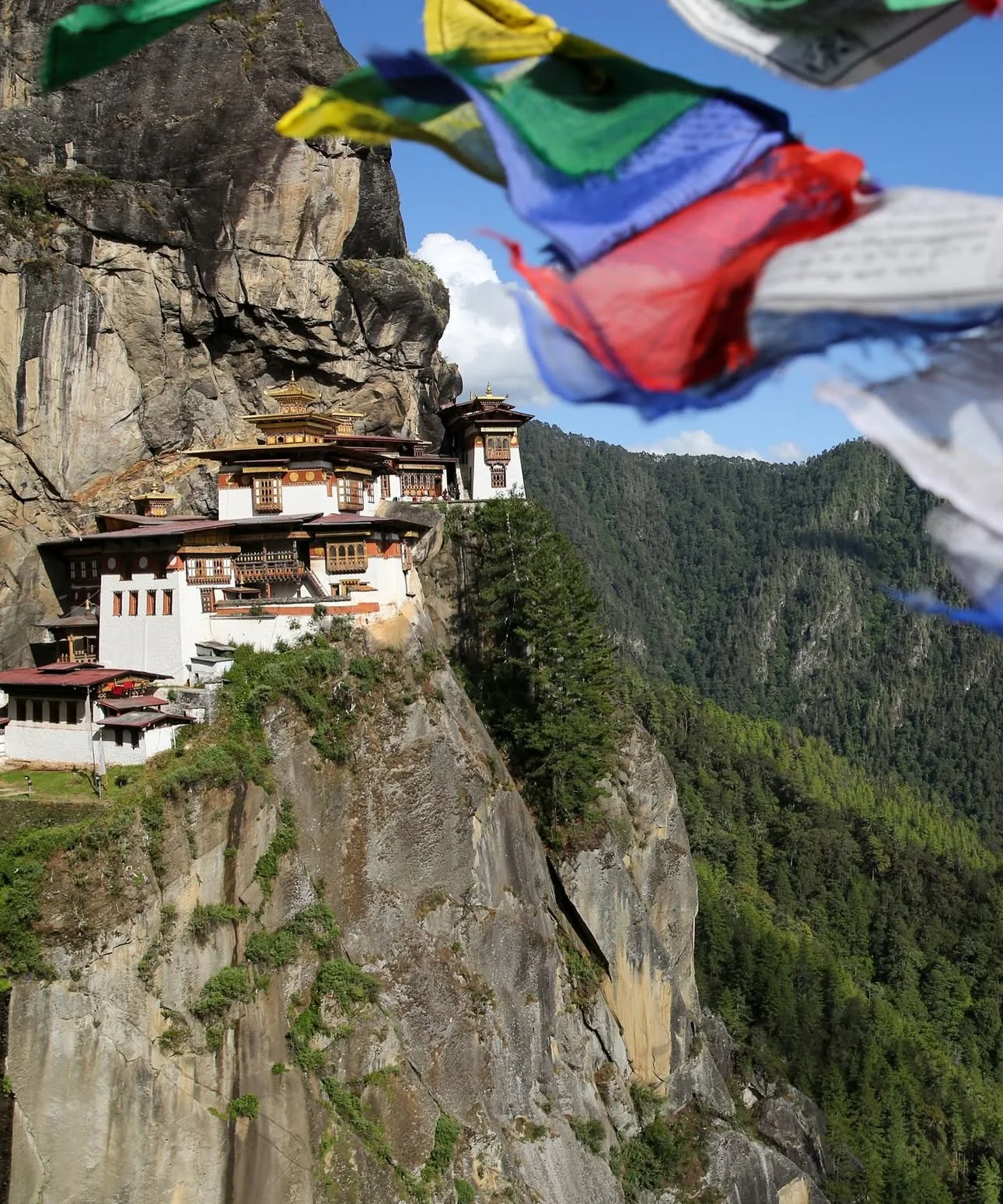
We begin in Thimphu, the only capital in the world without a traffic light, and move east over three storied mountain passes. We descend into the warm rice valleys of Punakha to cook ema datshi in a farmhouse kitchen, try our hand at archery with a village team, and sit in on evening prayers with the nuns of Sangchhen Dorji Lhuendrup. We climb into the glacial bowl of Phobjikha just as the black-necked cranes arrive from Tibet, and we are there for the Black-Necked Crane Festival at Gangtey Monastery, when the whole valley gathers to welcome them home. We travel on to Bumthang, the spiritual heart of Bhutan, to sit with nuns and hear them sing. Then we fly back west to Paro for the climb that women talk about for the rest of their lives: Taktsang, the Tiger's Nest Monastery, built into a cliff 900 metres above the valley floor.
This is not a tour, and it is not a test. The walks are gentle until the one that is not, and you will be ready for it by then. You stay in boutique lodges run by Bhutanese hands, eat at local tables, and are guided by two licensed Bhutanese guides and Penny the entire way. Guided when you need it, free to experience it. All you have to do is show up.
Fitness level
Gentle to moderate. One full hiking day to the Tiger's Nest, 10 km round trip with 900 metres of climb, ponies available for the first half.
Experience Details
Pricing (CAD)
deposit: $2,943
Private: $ 15,500
Shared pP: $ 13,000
06 Nov to 16 Nov 2027
Next Dates
Trip Duration
11 days 10 nights
The Daily Rhythm
A day-by-day look at our Bhutan itinerary
■
Our eleven day Bhutan itinerary moves west to east and then flies home, so you never retrace a road. We start low in Thimphu and Punakha to let your body settle into the altitude, then climb slowly into the high valleys of Phobjikha and Bumthang. Every two nights we stop. That is on purpose. Two nights in a place means one full day to walk its trails, eat in its farmhouses and sit in its temples without watching the clock.
Most days hold one meaningful walk, one sacred place and one long meal with Bhutanese people, not just Bhutanese scenery. The festival day in Phobjikha is the heartbeat of the trip. The Tiger's Nest is the crescendo. In between there is a farmhouse kitchen, a village archery ground, weaving looms, a reincarnate lama who loves football, and more quiet than most of us have had in years.
We hold the plan loosely. A monk may invite us in. The cranes may land at breakfast. Snow peaks may show themselves at Dochula. When that happens, we stop. This is the itinerary. The journey is what happens inside it.
-
Your journey begins with one of the most extraordinary landings in the world, threading between Himalayan ridges into the Paro Valley. Our two Bhutanese guides meet us at the airport with white silk khata scarves, and we drive an hour along the river to Thimphu, the only capital city on earth without a traffic light. Tonight is gentle on purpose. We settle into Ascent by Zhiwaling, drink a lot of water, and let the mountain air start its quiet work. Overnight Thimphu, 2,334 metres.
-
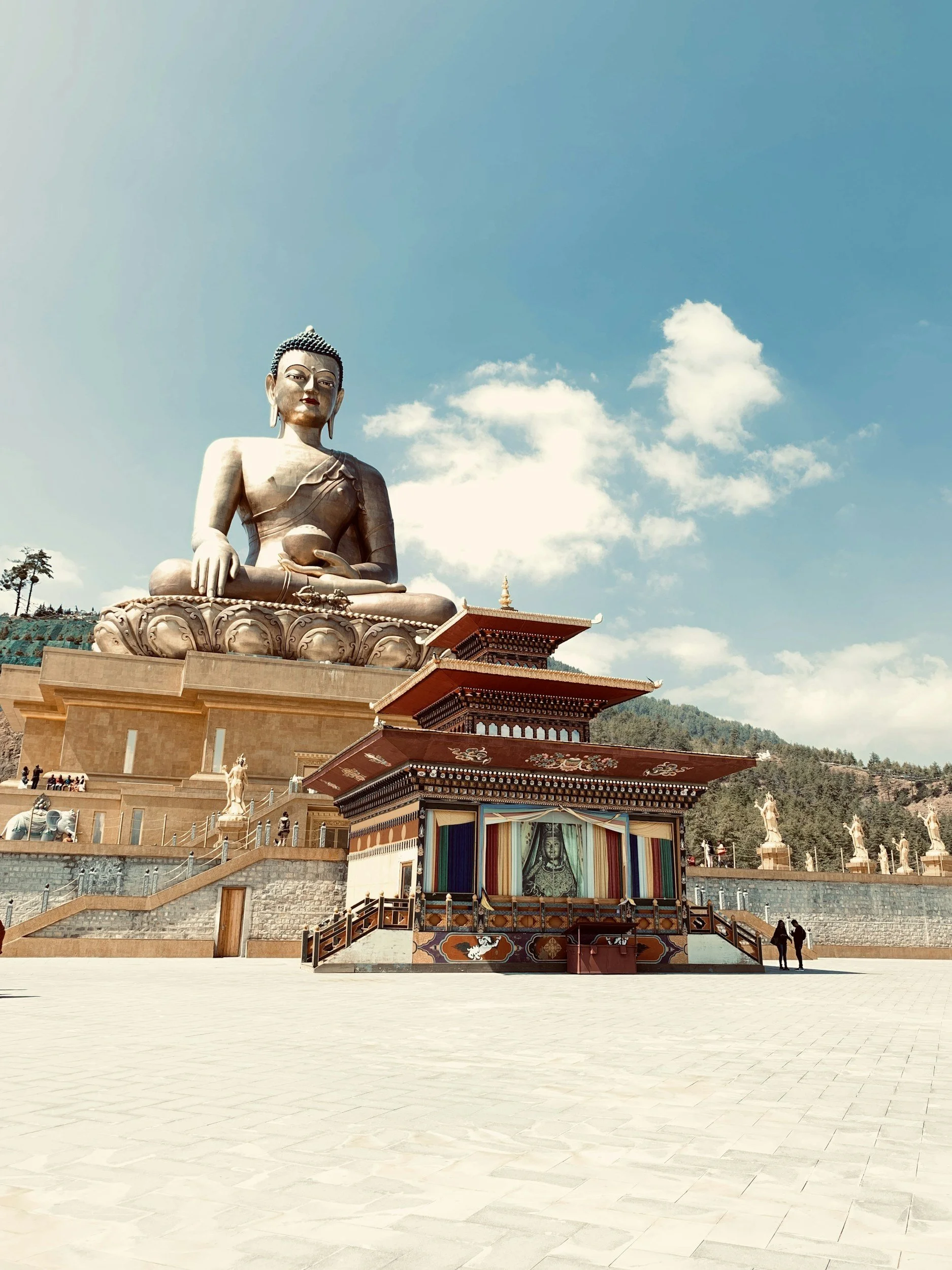
We stand at the feet of the Buddha Dordenma, a 51-metre gilded Buddha holding 100,000 smaller Buddhas inside, and look out over the whole valley. At the Memorial Chorten, we walk clockwise with the elders who come every morning to spin the prayer wheels. The afternoon is for craft: the Royal Textile Academy, a hands-on introduction to backstrap loom weaving, and the Centenary Farmers' Market, piled with red chillies and yak cheese. Overnight in Thimphu.
-
We climb to Dochula Pass at 3,100 metres, where 108 white chortens stand against a wall of snow peaks, including Gangkhar Puensum, the highest unclimbed mountain in the world. Then we walk. Three unhurried hours on a section of the Trans Bhutan Trail, through the country where Drukpa Kunley, the Divine Madman, made his home in the 1400s, with a picnic lunch at his ancient house. In the afternoon, we walk slowly through the village of Lobesa and its rice paddies, gold in November, stopping at a weaver's home to watch the loom and finishing at Chimi Lhakhang, his fertility temple. Our lodge sits right in the paddies. Overnight Raè by Zhiwaling, Punakha, 1,242 metres.
-
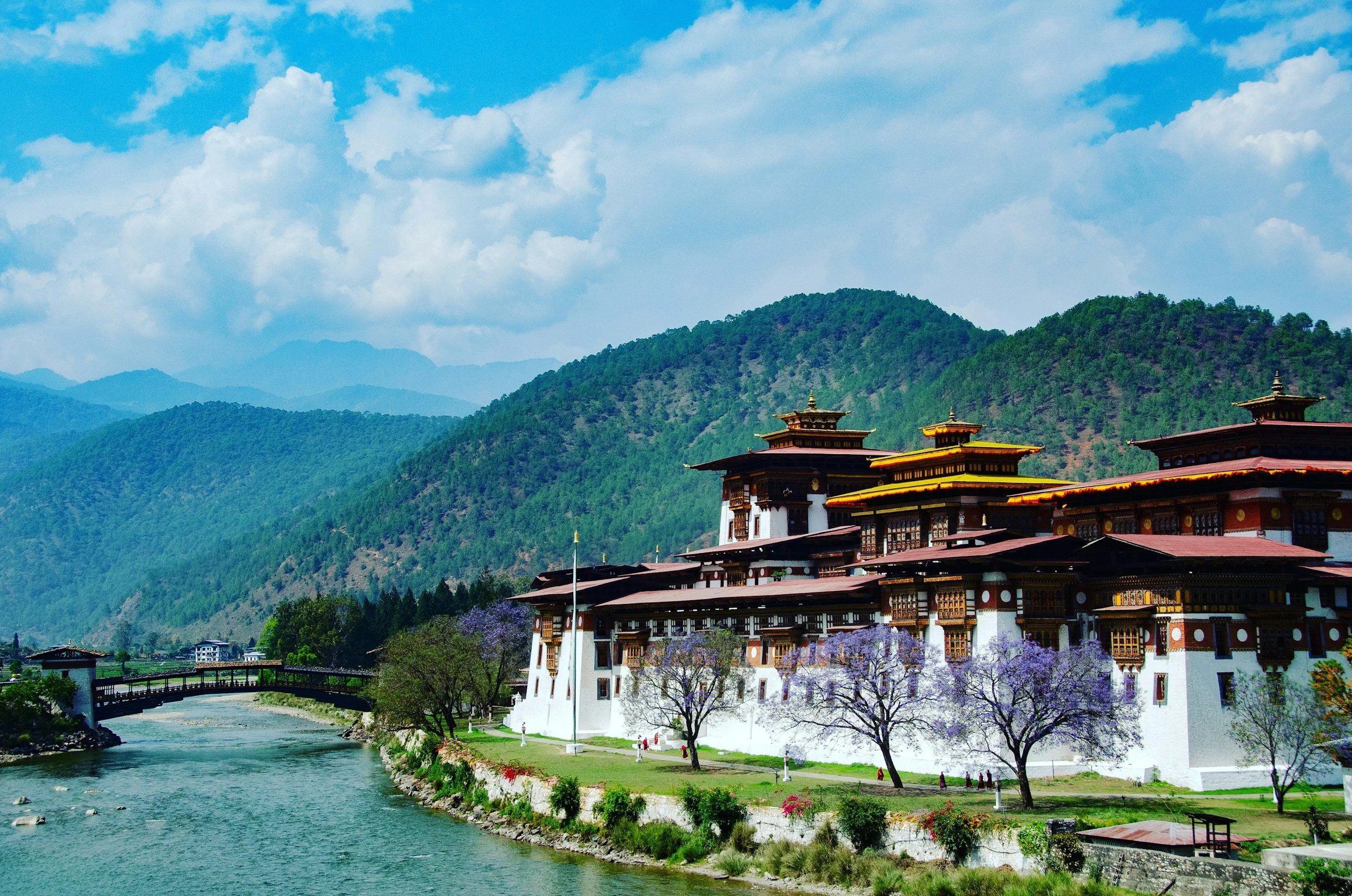
A 45-minute walk up through rice terraces brings us to the Khamsum Yulley Namgyal Chorten, built by the Queen Mother, with the finest view of the Punakha Valley from its top floor. Then we reach Punakha Dzong, the most beautiful fortress in Bhutan, set where the Mother and Father rivers meet, connected by a cantilevered wooden bridge. The afternoon belongs to village life. We pick up a bow at a traditional archery session with a local team, the national sport and the loudest, happiest thing you will do all week. Late in the day, we climb to Sangchhen Dorji Lhuendrup Nunnery on the ridge above the valley and sit quietly with the nuns for evening prayers. Dinner is in a Punakha farmhouse, where we cook ema datshi and red rice alongside the family before we eat it together. Overnight in Punakha.
-
We cross Pele La at 3,300 metres, the gateway to central Bhutan, and hoist our own prayer flags for the group at Lawala Pass. Then the road opens onto Phobjikha, a wide glacial bowl with no river through it, carved by ice. This is the winter home of the black-necked cranes, who arrive from Tibet each November and circle Gangtey Monastery three times before they land. We walk the 360-degree hike that our DMC's founder calls his favourite in the country, visit the monastery, and settle into Dewachen Lodge as the valley goes quiet. Overnight in Gangtey, 2,900 metres.
-
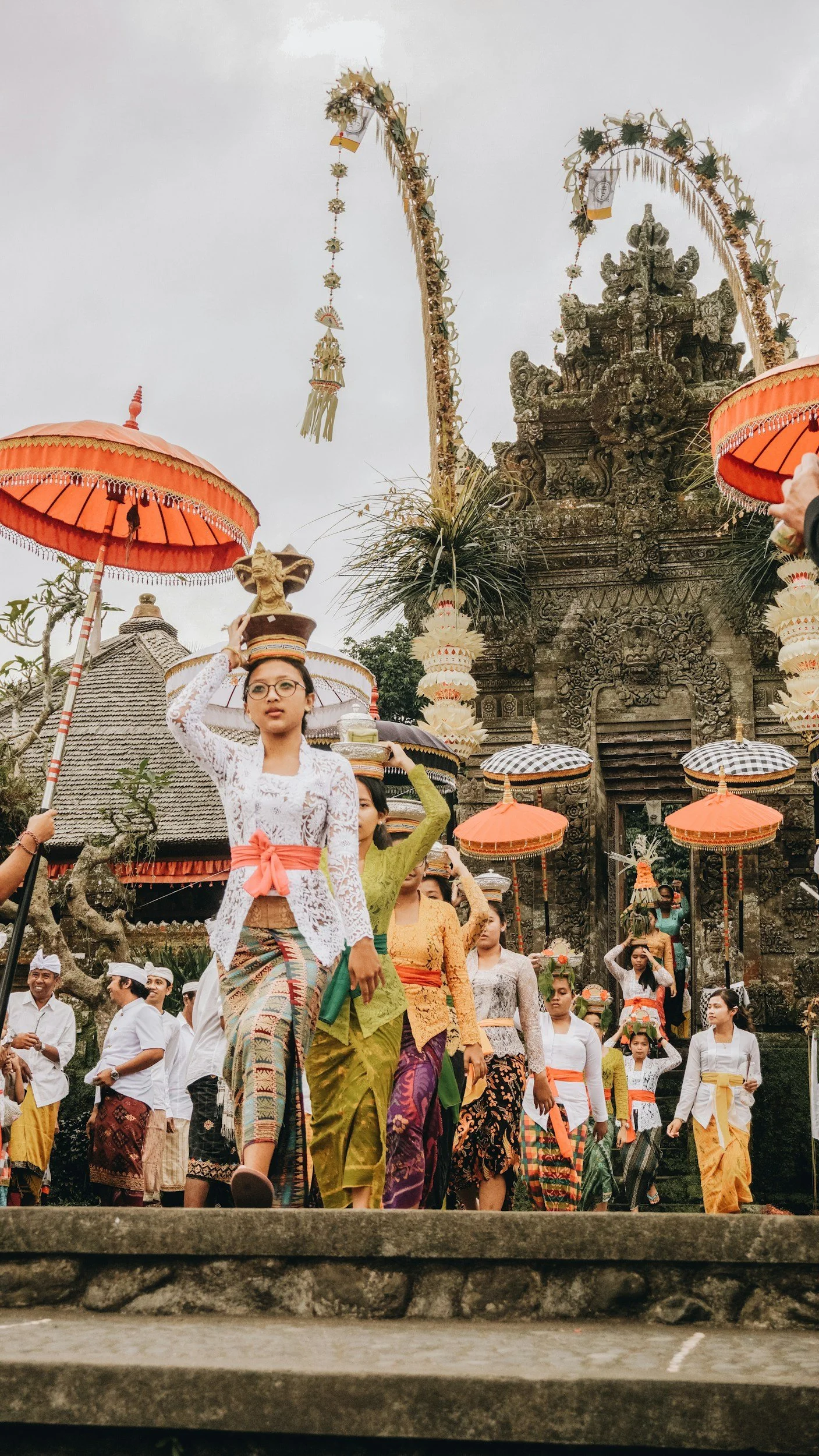
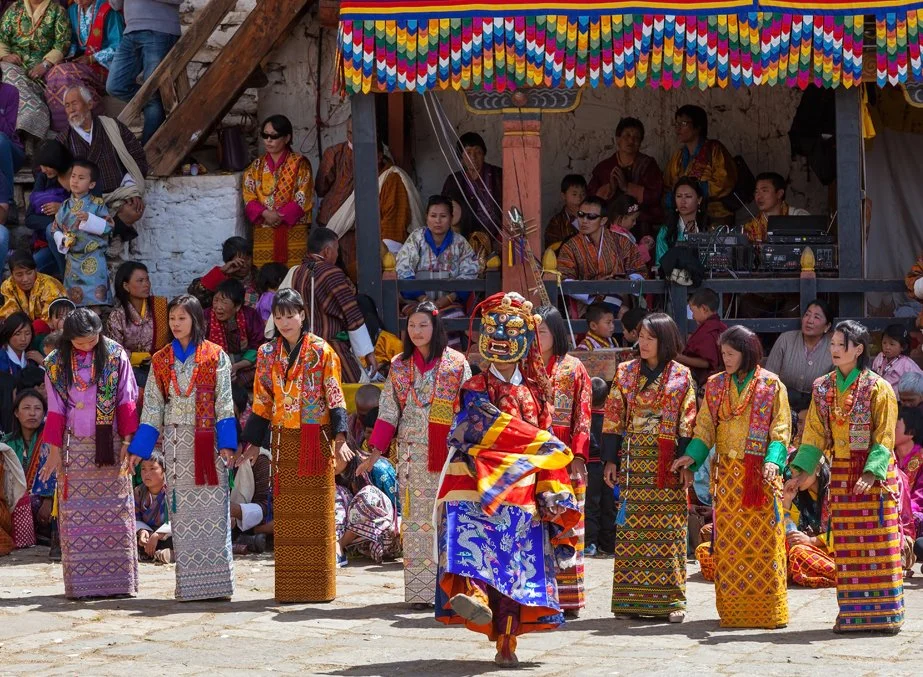
Today the whole valley gathers at Gangtey Monastery for the Black-Necked Crane Festival, held every 11 November to welcome the birds home. Schoolchildren dance in crane costumes, monks perform masked cham dances, and the courtyard fills with families in their finest kira and gho. We are guests at a community celebration, not spectators at a show. In the afternoon, we walk the Gangtey Nature Trail, 5.5 km along the valley floor through blue pine and dwarf bamboo, and visit Khewang Lhakhang, a small monastery of young novices, including an 11-year-old reincarnate lama who would very much like to talk to you about football. Dinner by the fire under some of the darkest skies in Bhutan. Overnight at Gangtey.
-
Our longest and most beautiful drive, about 197 km and six and a half hours with stops, through the geographic and spiritual centre of the kingdom. We pause at Trongsa Dzong, perched above the Mangde Chhu gorge, where every Bhutanese king has served as governor before taking the throne, and visit the Tower of Trongsa Museum. Lunch is at the Willing Waterfall Café. We cross Yotong La at 3,400 metres and drop into the Chumey Valley to meet the women of the yathra weaving cooperative, whose wool patterns exist nowhere else in Bhutan. Overnight Mountain Lodge, Bumthang, 2,600 metres.
-
Bumthang holds more sacred temples than anywhere else in Bhutan, and today we visit the three that matter most. Jambay Lhakhang, built in 659, is one of the 108 temples raised in a single day to pin down a demoness. Kurjey Lhakhang, where Guru Rinpoche left the imprint of his body in a cave wall. Tamshing Lhakhang, with 500-year-old murals that have never been restored. We eat buckwheat pancakes in a farmhouse, taste Red Panda beer and Swiss cheese at the brewery, and drive to Mebar Tsho, the Burning Lake, where a treasure revealer walked into the water holding a lamp and came out with it still lit. Then the moment many women remember most: the nuns of Pema Choling Nunnery sing and drum a prayer for your well-being and for peace in the world. Overnight Bumthang.
-
Instead of two days of mountain road, we take a 30-minute flight from Bumthang to Paro, looking back over every pass we crossed. The afternoon is yours. Wander Paro's traditional shopfronts, visit the National Museum in its round watchtower, book a massage, or do nothing at all. You have earned it, and tomorrow is the big one. Overnight Zhiwaling Heritage, Paro, 2,200 metres.
-
We start early. The trail climbs steadily through blue pine hung with Spanish moss and prayer flags to the cafeteria viewpoint at the halfway mark, where the classic photograph and a cup of tea are waiting. Ponies are available for that first half for anyone who would rather ride. The final stretch drops into a gorge and climbs a stone stairway to the monastery gates, 3,120 metres up and 900 metres above the valley floor, built around the cave where Guru Rinpoche meditated for three months. Five to six hours round trip at our pace, which is the only pace that matters. We treat it as a walking meditation, not a race. This is where grit meets grace, and every woman who has done it with us says the same thing at the top. Farewell dinner tonight. Overnight Paro.
-
A last breakfast with the peaks in view, then our guides drive us to Paro International Airport. As the plane lifts out of the valley, you will see the Paro Dzong one more time. You leave with photographs, with ten women who know you now, and with the particular kind of stillness that only Bhutan gives. Tashi Delek. Good fortune, and go well.
-
The Rhythm of the Kingdom
We stay two nights everywhere. Every lodge below is Bhutanese-owned or Bhutanese-run, chosen for warmth, views and a good bed after a long day, never for the brand name on the gate.
Thimphu | 2 Nights | Ascent by Zhiwaling. We begin in the capital at 2,334 metres, with two nights to acclimatize and explore the city's fortresses, markets and weaving studios without rushing.
Punakha | 2 Nights | Raè by Zhiwaling. A boutique lodge set in the rice paddies of the warm, low Punakha Valley. Two nights gives us a full day for the dzong, the river and the walk to the chorten.
Phobjikha (Gangtey) | 2 Nights | Dewachen Lodge. A traditional stone and timber lodge above the valley floor in the winter home of the black-necked cranes. Two nights so we have the festival day and the quiet day both.
Bumthang | 2 Nights | Mountain Lodge. Our base in the spiritual heartland, within reach of the kingdom's oldest temples, the Burning Lake and the nunnery.
Paro | 2 Nights | Zhiwaling Heritage. A former National Geographic Unique Lodge built in the style of a dzong, with a rest day before the Tiger's Nest and a farewell dinner after it.
-
✔ 10 nights in handpicked Bhutanese boutique lodges, twin share
✔ All meals, breakfast, lunch and dinner, throughout the journey
✔ Two licensed Bhutanese guides, a senior guide and an assistant guide, dedicated to our group only
✔ Private coach and a separate luggage van for the full itinerary
✔ Domestic flight from Bumthang to Paro, including airport transfers
✔ All monument, museum, temple and dzong entrance fees
✔ Punakha farmhouse visit with a cooking lesson and family meal, a traditional archery session, evening prayers at Sangchhen Dorji Lhuendrup Nunnery, and a guided village walk through Lobesa with a weaver's home visit
✔ Black-necked Crane Festival at Gangtey Monastery
✔ Bhutan Sustainable Development Fee and tourist visa, including processing
✔ Bottled drinking water throughout
✔ Farmhouse visits, weaving studios, the nunnery prayer ceremony and all cultural experiences listed
✔ Penny Light as your host from the first khata to the last farewell
-
✘ International airfare to and from Paro (Bangkok to Paro return on Drukair or Bhutan Airlines runs about US$850 per person, booked by you or by our Bhutan partner on request)
✘ Mandatory travel insurance
✘ Gratuities for guides, drivers and lodge staff
✘ Alcoholic drinks, spa treatments, hot stone baths, laundry and other personal expenses
✘ Single room supplement for anyone who prefers her own room
✘ Any hotel nights before or after the journey dates
[ FAQ ]Common Questions
-
What’s Included
✔ Accommodation in handpicked boutique hotels & lodges
✔ All meals as per itinerary
✔ Private vehicle transfers
✔ Experienced English-speaking local guide
✔ Sightseeing, activities & entrance fees
✔ Bhutan visa processing
✔ Domestic flight from Bumthang to Paro
✔ Cultural immersion experiences & local interactions -
Absolutely not. You never have to do yoga. You can stretch, nap, breathe, or just exist on your mat. Zero gold stars for pushing, full credit for listening to your body.
-
We understand that life can bring unexpected transitions. Because our journeys are intimate and involves significant advance planning, our deposits are non-refundable. If you cancel before the final balance is due (90 days before the start of the trip), we offer a fifty percent refund of any additional payments made, minus the initial deposit and a small processing fee. Within ninety days of departure, we are unable to offer any refunds. However, we do allow you to transfer your place to another traveler for a small administrative fee if you are unable to join us.
-
Our compass is set firmly on the ground. While we have the TICO credentials to navigate the world of air travel, we choose to focus my energy on what I do best: crafting the visceral, land-based experiences that make your journey unforgettable. Think of us as your architect for everything that happens once you touch down. You are responsible for your own passage through the clouds, but once you land, you can simply breathe and let us take the lead. We are always happy to provide guidance on arrival times and preferred airports to ensure your transition into our sanctuary is seamless. We can also recommend a trusted travel agent to help you book your flights.
-
Yes. To ensure you are fully protected against the unpredictable, comprehensive travel insurance is a mandatory requirement for every guest. This serves as your safety net for any medical needs, travel delays, or last-minute cancellations. We will ask for proof of your insurance prior to departure to ensure you are covered for the entirety of our time together.
-
Bhutan is perhaps one of the most peaceful and secure places on earth for a woman to explore. The kingdom is deeply rooted in Buddhist values, which emphasize compassion, non-violence, and a profound respect for all living beings. This cultural foundation creates an atmosphere of safety that is felt the moment you arrive. Crime is exceptionally rare, and the local people are known for their gentle nature and their genuine desire to ensure that guests feel welcome and protected.
As we move through the valleys as a small group of women, you will find that the local community is incredibly respectful of our presence. While the physical safety of the kingdom is a given, we also focus on your emotional and spiritual safety. Travelling within our intimate circle allows you to fully open yourself to the experience, knowing that every detail of your well-being is being looked after by both our local guides and your founder. You are free to wander the quiet streets of Paro or sit in meditation in a village temple with a complete sense of ease and tranquillity.
-
There are currently no mandatory vaccinations required to enter the Kingdom of Bhutan, though we always recommend that you visit your healthcare provider or a travel clinic several weeks before your departure. It is a wise practice to ensure your standard boosters are up to date and to discuss any personal health needs for international travel. While Bhutan is a pristine environment, your physical comfort is our priority, and we want you to arrive feeling prepared and vibrant.
The primary health consideration for this journey is our gentle transition to the higher altitudes of the Himalayas. We have carefully timed our itinerary to allow your body to acclimatize naturally as we move through the valleys. We encourage a pace of slow and steady movement, accompanied by deep hydration and mindful rest. While the mountain air is incredibly pure, the sun can be quite strong at these elevations, so we advocate for high-quality sun protection and skin care. Rest assured that we are always prepared with the necessary support to ensure you feel your best as we journey toward the clouds together
-
The local currency is the Ngultrum, which is fixed at the same value as the Indian Rupee. While some larger shops in Paro and Thimphu may accept credit cards, Bhutan is very much a cash based society, especially when we visit local artisans or small village stalls. We recommend bringing US Dollars in clean, crisp bills to exchange upon arrival or using the ATMs available in the larger towns. We will be there to assist you with currency exchange so that you always feel prepared for a spontaneous purchase of a handwoven textile or a handmade prayer bowl.
-
The national language of the kingdom is Dzongkha, a beautiful and rhythmic tongue that translates to the language of the fortress. While Dzongkha is the primary way the local people connect with their heritage, you will find that English is exceptionally common throughout Bhutan. It is the medium of instruction in schools and is spoken with great proficiency by our guides, the artisans we meet, and many of the people you will encounter in the valleys.
You will never find yourself at a loss for words during our journey, as communication is treated with the same warmth and patience that defines all other aspects of Bhutanese life. While English will carry you through your daily needs, learning a few simple phrases in Dzongkha is a wonderful way to bridge the gap between guest and friend. Our local guides take great joy in teaching us how to offer a heartfelt Kuzuzangpo La, which is a respectful greeting used to wish someone good health. This small effort of the heart is always met with a bright smile and a deepening of the connection between the local community.
-
Every guest travelling to Bhutan requires a visa, which we take care of on your behalf as part of your retreat experience. One of the most unique aspects of Bhutanese travel is the Sustainable Development Fee, often referred to as the SDF. This is a daily contribution made by every visitor to support the kingdom's carbon-neutral status, free healthcare, and education for its citizens. This fee is already included in your journey price, meaning your presence directly contributes to the preservation of the culture and environment you have come to admire.
A riad is a traditional Moroccan residence designed with a profound focus on privacy and inner peace. The word itself comes from the Arabic term for garden, which is exactly what you find at the heart of the home. Unlike Western architecture that looks outward toward the street, a riad is oriented inward toward a central courtyard. This open-air space often features lush greenery, lemon trees, and reflecting pools, creating a quiet sanctuary that feels miles away from the vibrant energy of the medina just outside the walls.
Each room is uniquely situated around this central garden, offering a sense of intimacy and stillness that is truly unparalleled. Staying in a riad is not just about luxury; it is about experiencing the architectural soul of Morocco, where the "Grit" of the busy city streets is balanced by the "Grace" of the hidden oasis within.
-
The pilgrimage to the Tiger’s Nest is a moderately challenging but deeply rewarding experience. The path is a steady uphill climb that takes approximately two to three hours to ascend, depending on our pace. We treat this as a walking meditation rather than a race, allowing plenty of time to pause, breathe, and take in the spectacular views. For those who may feel uncertain, there is often the option to hire a horse for the first half of the ascent. Reaching the monastery is a powerful moment of grit and grace that most women find to be the highlight of their entire journey.
-
Our itinerary is intentionally designed to help your body adjust gracefully to the mountain air. We begin in Thimphu and Punakha, which sit at lower elevations, allowing you to acclimatize before we move into the higher valleys of Phobjikha and Bumthang. We encourage you to move at your own pace, stay deeply hydrated, and listen to the wisdom of your body. While the air is thinner, it is also incredibly pure, and most women find that a slow and steady rhythm allows them to enjoy every moment of the ascent.
-
Layers of Light and Warmth: Dressing for Bhutan
When packing for the Kingdom of the Thunder Dragon, we invite you to think of your clothing as a soft armour of comfort and respect. The November days are often filled with an extraordinary, clear light that feels warm against the skin, yet as soon as the sun dips behind the peaks, the temperature drops into a refreshing Himalayan chill. A system of high-quality layers is essential, allowing you to easily adjust as we move from the sun-drenched valleys to the cool, stone interiors of ancient monasteries. Think of breathable base layers in silk or fine wool, topped with a versatile fleece or a lightweight down vest that provides warmth without any unnecessary bulk.
Respect for local tradition is a cornerstone of our journey together. Bhutanese culture is modest and deeply respectful, and our attire should reflect this same grace when we enter sacred spaces. For our visits to the majestic dzongs and village temples, both shoulders and knees must be covered. Long sleeves are often required for the most sacred inner sanctuaries, so a beautiful pashmina or a structured jacket is a vital addition to your day bag. Above all, your footwear is your most important ally. We recommend a pair of sturdy, well-worn hiking shoes or trail runners with excellent traction for our climb to the Tiger’s Nest and our gentle walks through the pine forests of the Tang Valley.
-
Bhutanese cuisine is soulful and hearty, designed to warm you from the inside out. The most famous dish is Ema Datshi, a spicy and savoury blend of chillies and local cheese, though we always ensure there are plenty of milder options available. You can expect an abundance of red rice, fresh vegetables, and delicious dumplings known as momos. We take great care to curate meals that are both authentic and comfortable for your palate, and we can easily accommodate vegetarian or gluten-free requirements.
-
While Bhutan is a place of deep spiritual practice, it also has a long and interesting relationship with local brews and spirits. You will find that many Bhutanese people enjoy a drink in social settings, and the country even produces its own range of quality whiskies, rums, and a very popular selection of craft beers. The Red Panda Weiss Beer, brewed in the Bumthang Valley, is a local favourite that we will certainly have the chance to sample during our stay in the heartland.
In the boutique lodges and hotels where we reside, you will find well-stocked bars offering a variety of international wines and spirits. It is important to note that while alcohol is widely available, the kingdom observes a Dry Day every Tuesday, during which no alcohol is sold in shops or served in public bars as a mark of respect for local tradition. However, as our guests, you may still enjoy a quiet glass within the comfort of our private accommodations. We approach our evening drinks with the same sense of presence that we bring to our meditation, enjoying a crisp local cider or a warming glass of wine as a way to toast to the day’s adventures and the connections we have made.
-
In the Kingdom of Bhutan, tipping is a deeply appreciated gesture that reflects the Buddhist value of generosity. While it is not a mandatory requirement, it is a significant way to honour the hard work and heart that our local guides and drivers pour into our experience. These individuals become our protectors and storytellers during our time in the Himalayas, and a thoughtful tip is a beautiful way to say thank you for their wisdom and care.
For our primary local guide and driver, we suggest a collective gift from the group at the end of our journey, typically ranging from fifteen to twenty dollars per guest for each day of the trip. In the boutique lodges and farmhouses where we stay, a small contribution to the general staff tipping box is a lovely way to support the entire team behind the scenes. For smaller personal services, such as a rejuvenating massage or a porter who assists with your luggage, a few dollars or the equivalent in local currency is a perfect token of thanks. We will be right there to help you with the nuances of these exchanges, ensuring that your final farewells are as graceful and seamless as the journey itself.