inida - KERALA & RAJASTHAN India Frb 2027India
[ OVERVIEW ]The Soul of the Subcontinent: A Pilgrimage of Contrast
India is a kaleidoscope of devotion and ancient wisdom that challenges and charms in equal measure. Our journey is a curated tapestry beginning in the emerald quiet of Kerala. Here, we trade the modern world for the refined serenity of boutique backwater retreats and the scent of spice plantations. From the tranquil South, we transition to the royal grandeur of the Golden Triangle, staying in heritage estates and hand-selected luxury sanctuaries amidst the rose-hued streets of Jaipur and the Taj Mahal.
This is a land of architectural marvels where every palace tells a story of grit and elegance. In India, we do not just travel; we unravel. We move through the vibrant intensity with grace, finding beauty in the ringing of temple bells and the private artistry of local masters. This is your time to embrace the full spectrum of the present moment and rediscover the radiant colors of your own spirit from the comfort of exquisite surroundings.
Experience Details
Trip Duration
18 days 19 nights
Pricing (CAD)
deposit: $2,943
Private: $12,960
Shared pP: $10,285
02 Feb - 20 Feb 2027
Next Dates
The Daily Rhythm
■
A day-by-day look at our India itinerary
This itinerary is designed as a deep immersion into the heart of India, moving from the restorative calm of the South to the iconic wonder of the North. We spend our first twelve days in Kerala, a land where nature and tradition intertwine in perfect harmony. We will wander the cobblestone streets of Cochin, trek through the tea hills of Munnar, and drift along the Kumarakom backwaters on a traditional houseboat. It is a time for resting, resetting, and reconnecting with the earth.
As we transition to the second chapter of our journey, we fly into the vibrant energy of Delhi, Agra, and Jaipur. We witness the sunrise over the Taj Mahal and explore the hilltop masterpieces of Rajasthan, closing our time together with hands-on cultural experiences like block printing and private cooking sessions. This nineteen-day pilgrimage is not merely a sightseeing tour; it is a slow and intentional exploration for the woman who feels the pull of something deeper. We invite you to experience India not as a tourist, but as a seeker, open, curious, and ready to be transformed.
-
Your journey begins in the historic port city of Cochin, where the scent of salt air and spice welcomes you to Kerala. After settling into our boutique heritage hotel, we gather for a gentle evening together, beginning our transition into the slow, rhythmic pace of Southern India.
-
We spend the day wandering through the cobblestone streets of Fort Kochi, a living mosaic of Portuguese, Dutch, and Jewish history. We visit the ancient synagogue and watch the iconic Chinese fishing nets dip into the Arabian Sea at sunset, reflecting on the layers of time that have shaped this coastal sanctuary.
-
Today, we visit the village of Kumbalangi to witness the authentic daily life of the local community. We learn about traditional fishing and coconut fibre weaving, finding beauty in the simple and sustainable ways of the water. It is a day of quiet connection and humble grace.
-
We leave the coast behind and ascend into the misty tea plantations of Munnar. The air turns crisp and cool as we enter a landscape of rolling green hills that look like a velvet carpet spread across the earth. We check into our hillside retreat and breathe in the purity of the mountains.
-
We spend the morning exploring the emerald trails of Munnar, visiting a local tea museum to learn the art of the harvest. After a soft trek through the plantations, we enjoy a fresh brew while looking out over the panoramic views, feeling the deep stillness that only high altitudes can provide.
-
Our journey continues to Thekkady, the heart of India's spice country. We tour a working plantation to see how cardamom, pepper, and cinnamon grow in the wild. The evening is spent in the company of the forest, listening to the whispers of the jungle as we settle into our lodge.
-
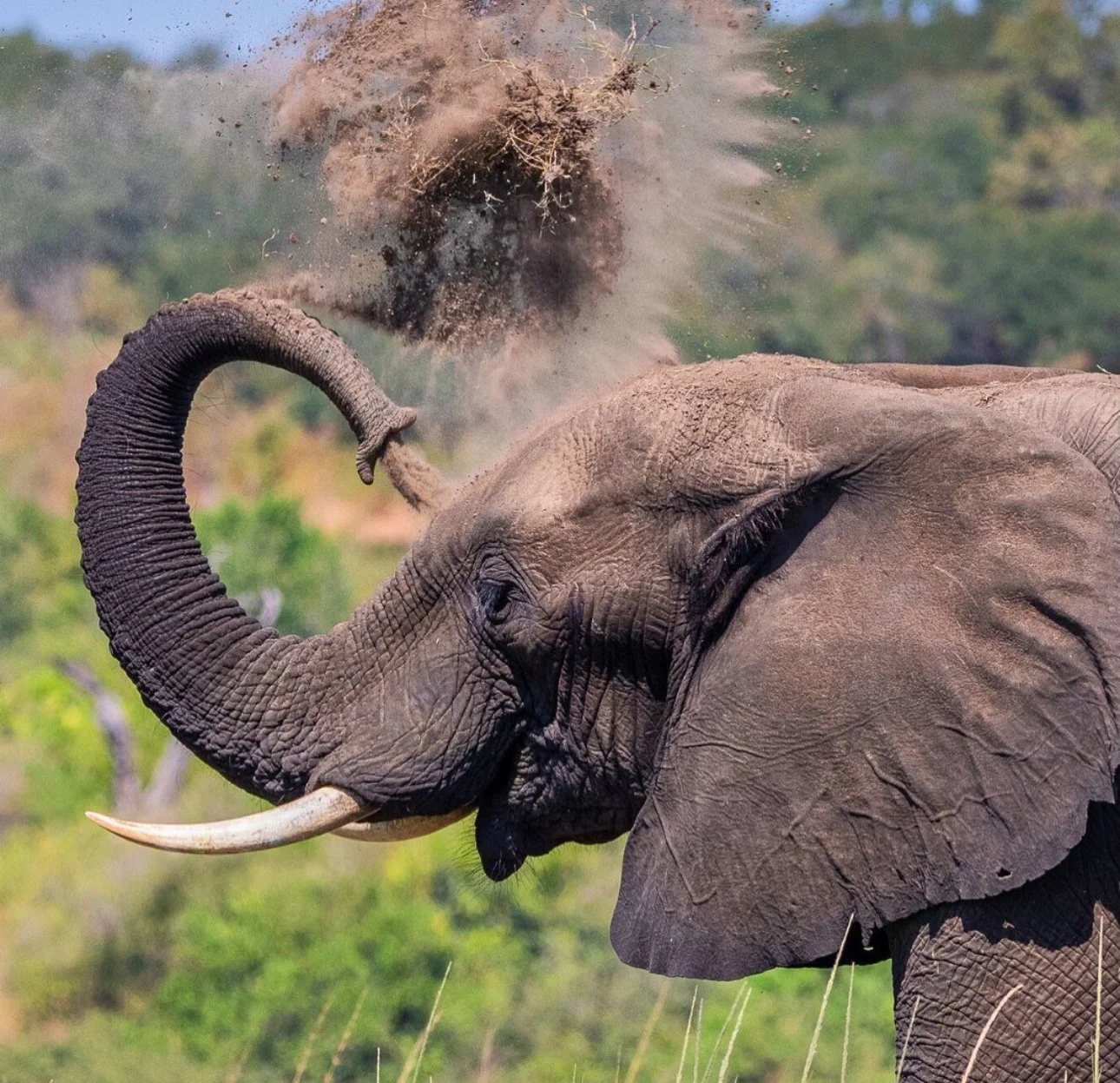
We join a local naturalist for a jungle safari through the Periyar sanctuary, keeping our eyes open for elephants and exotic birds. It is a day to honour the wildness of nature and the grit of the natural world, followed by a quiet evening of reflection under the forest canopy.
-
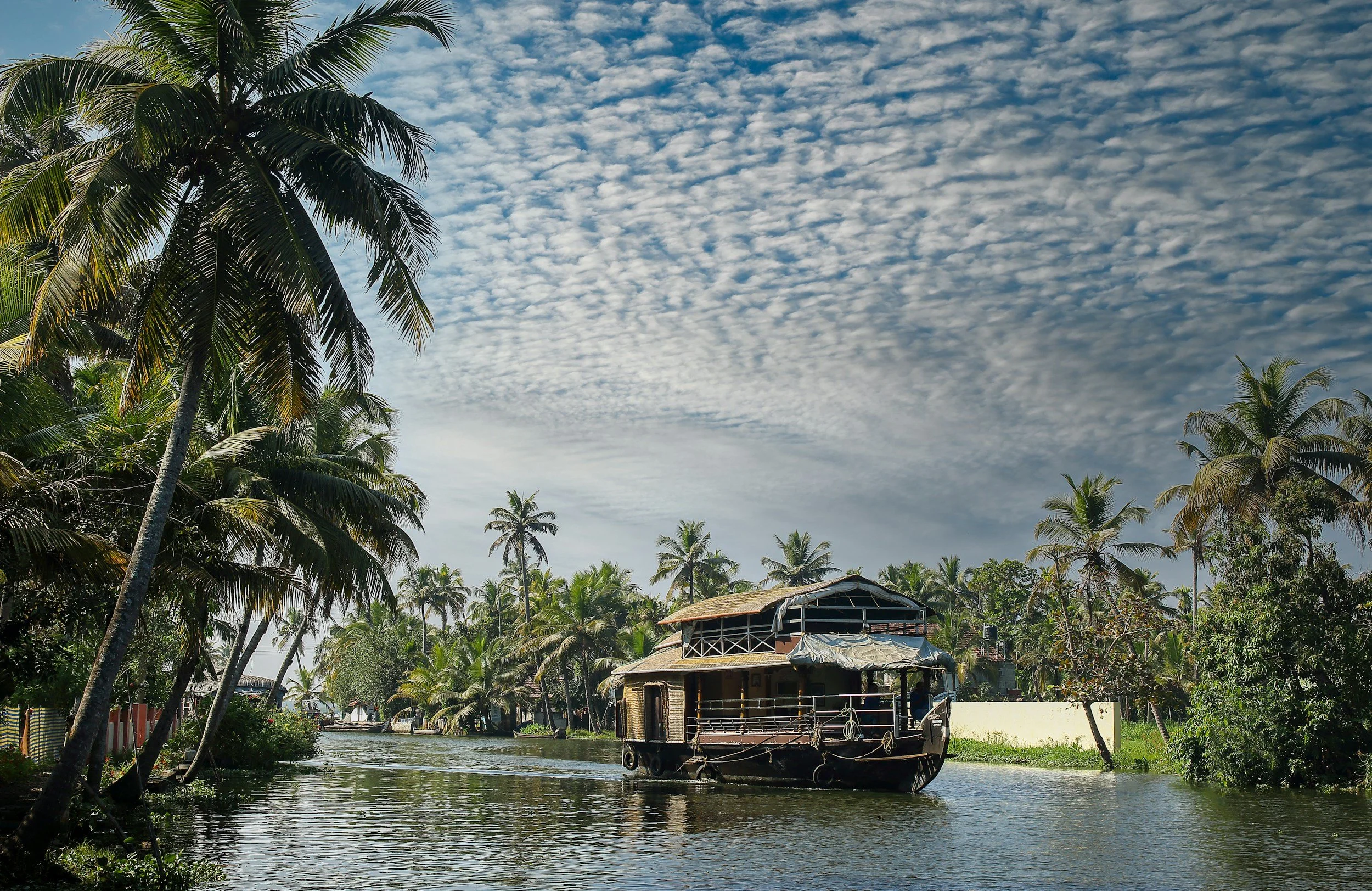
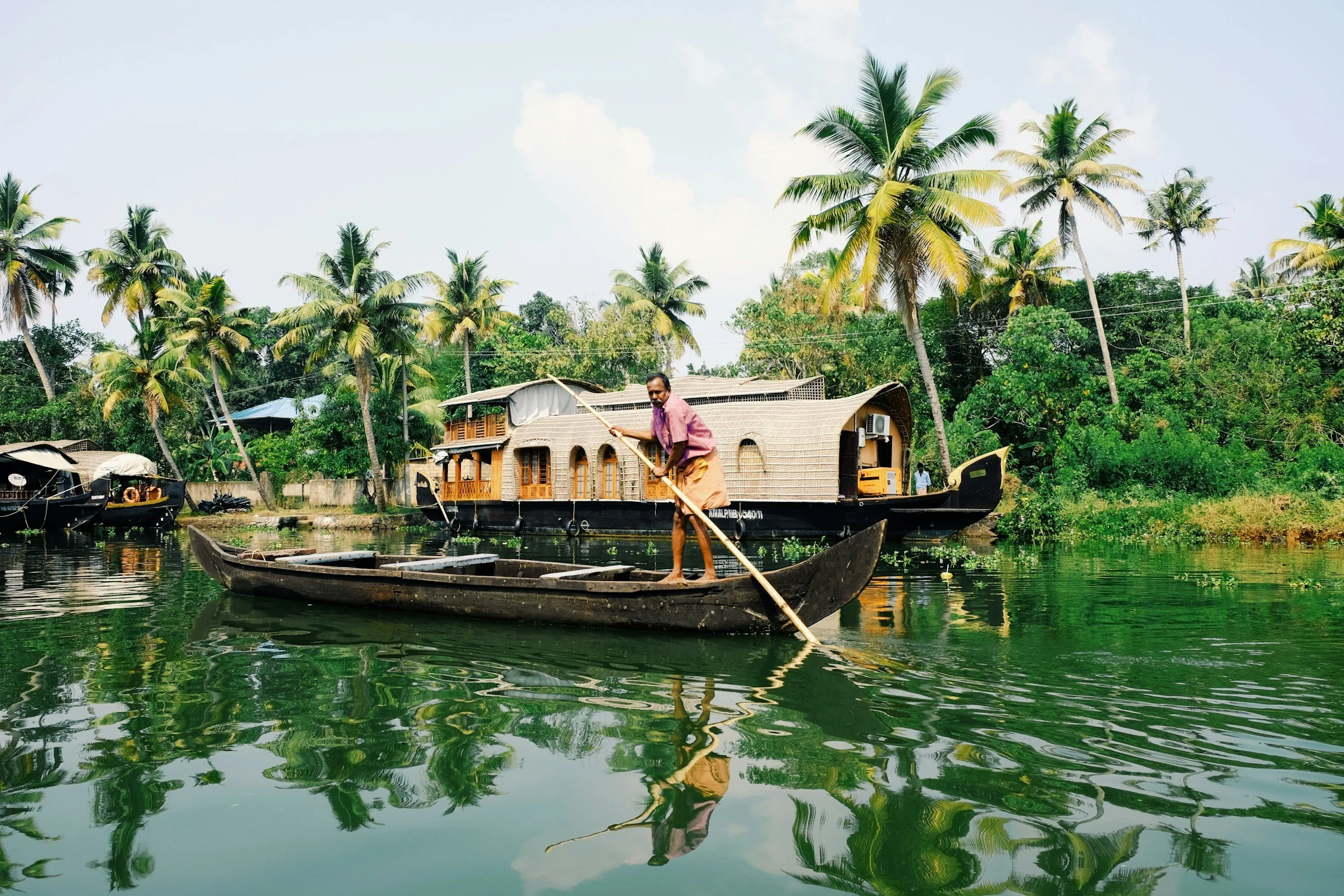
We travel to Kumarakom and board a traditional thatched-roof houseboat for a private cruise through the famous backwaters. As we drift along the palm-fringed canals, we watch the world go by at a walking pace, sharing a traditional Keralan meal as the water laps against the hull.
-
Waking up on the water is a transformative experience. We spend another day immersed in the tranquillity of the canals, observing the local life that unfolds along the banks. This is a time for reading, journaling, and simply being, as the gentle movement of the boat lulls us into a state of deep peace.
-
Our third day in the backwaters allows the mind to truly settle. We explore the smaller veins of the canal system, visiting tiny island communities and hidden shrines. It is a masterclass in the art of slowing down and finding contentment in the present moment.
-
We transition to the peaceful beachside village of Marari, where the golden sands meet the warm Arabian Sea. Our home for the next two nights is a sanctuary designed for rest. We spend the afternoon with our toes in the sand, letting the ocean breeze wash away the last of our worldly cares.
-
Today is dedicated entirely to your well being. You may choose to indulge in an Ayurvedic massage, join a gentle yoga session by the sea, or simply find a quiet corner to stretch and breathe. It is a day to honor the wisdom of your body before we begin our journey North.
-
We bid farewell to the calm waters of Kerala and fly to the vibrant capital of Delhi. The shift in energy is palpable as we move from the emerald South to the historic heart of the North. We settle into our regal accommodations and prepare for the next chapter of our story.
-
We explore the fascinating contrasts of Delhi, from the narrow, spice scented lanes of Old Delhi by rickshaw to the colonial grace of the Presidential Palace. We visit the towering Qutub Minar and the serene Humayun’s Tomb, witnessing the architectural grandeur of the Mughal Empire.
-
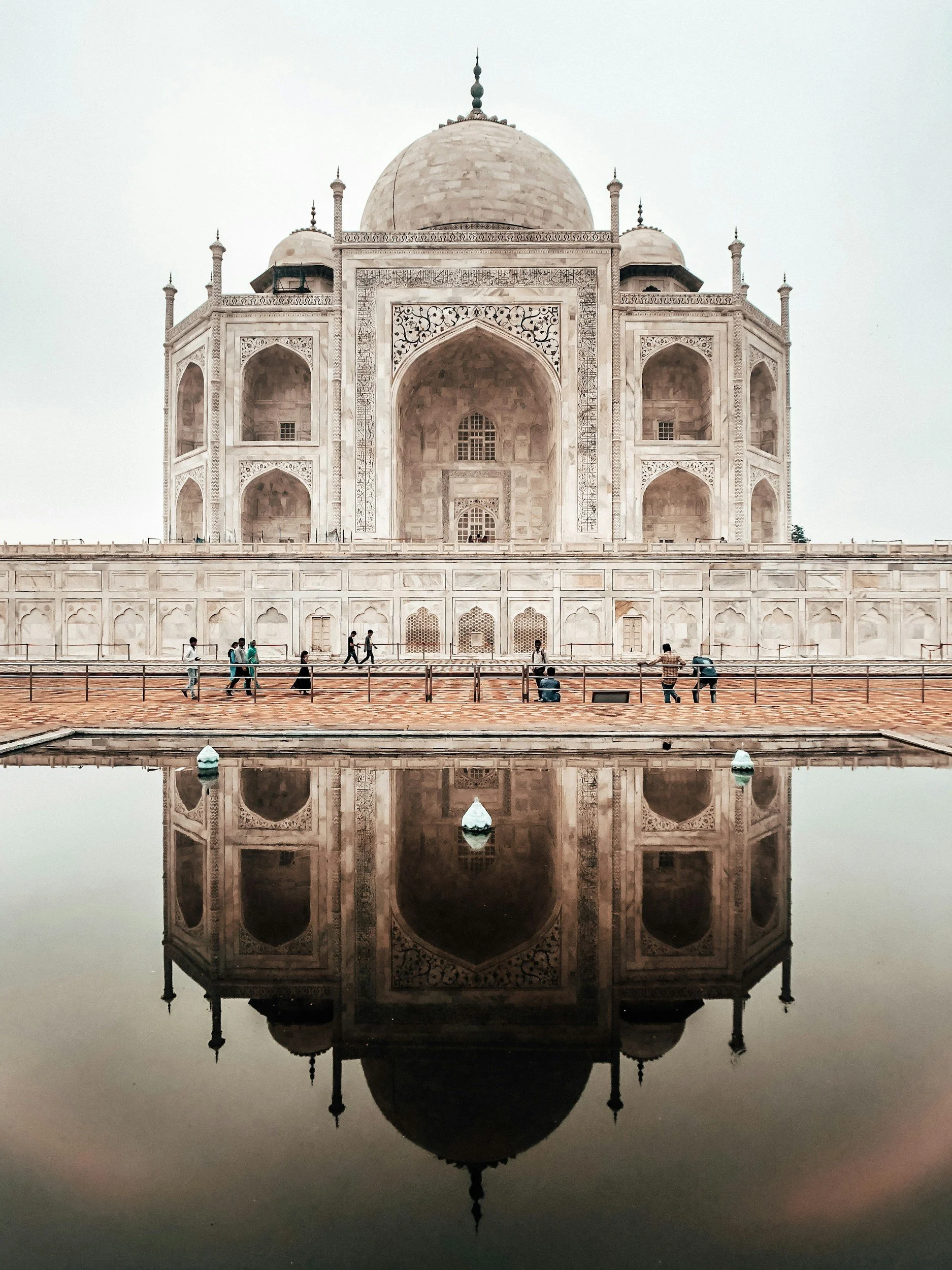
We journey to Agra, the city that holds the world's most famous monument to devotion. We explore the massive red sandstone walls of the Agra Fort, learning about the emperors who once ruled from these heights, and catch our first glimpse of the Taj Mahal shimmering in the distance.
-
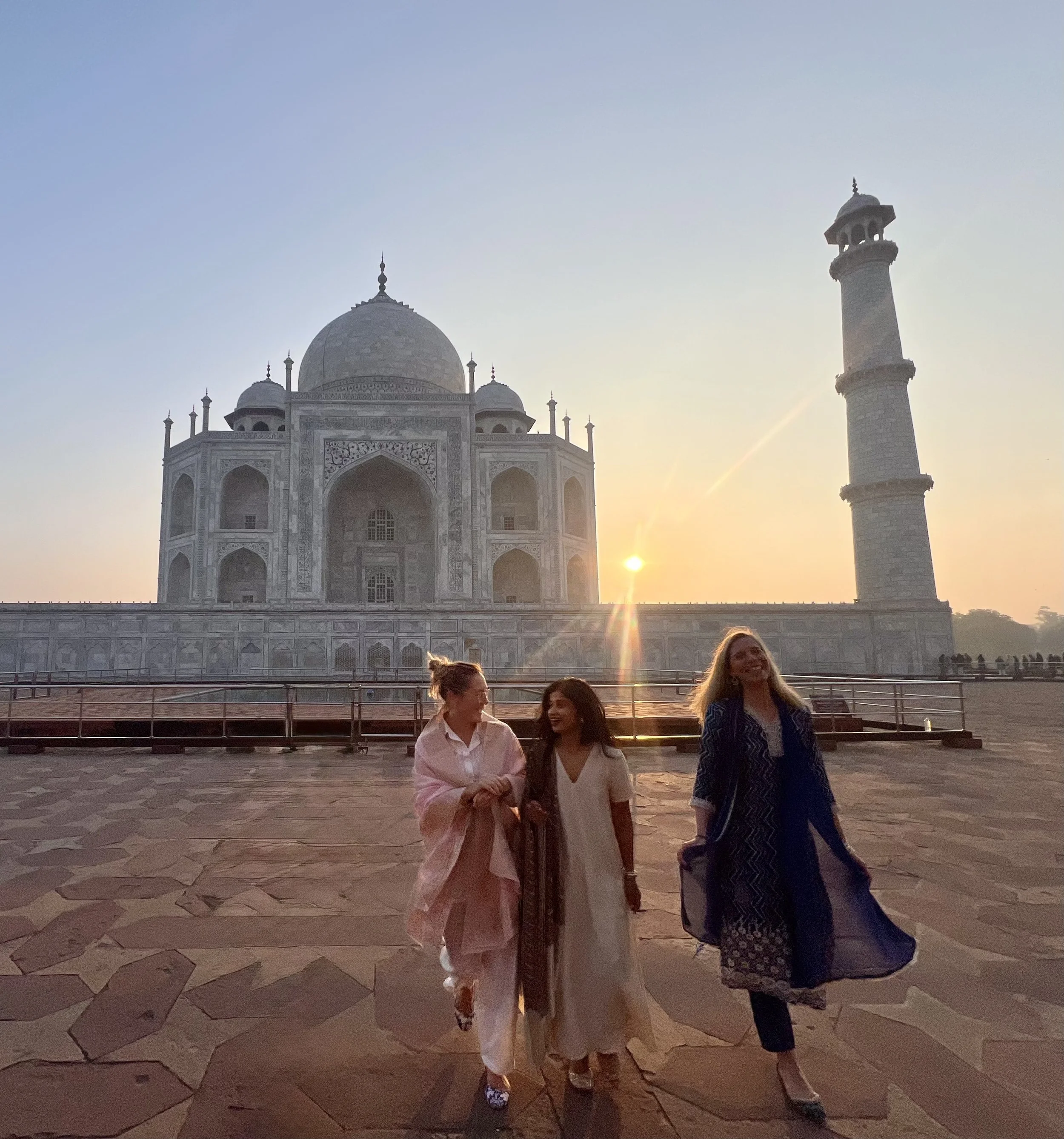
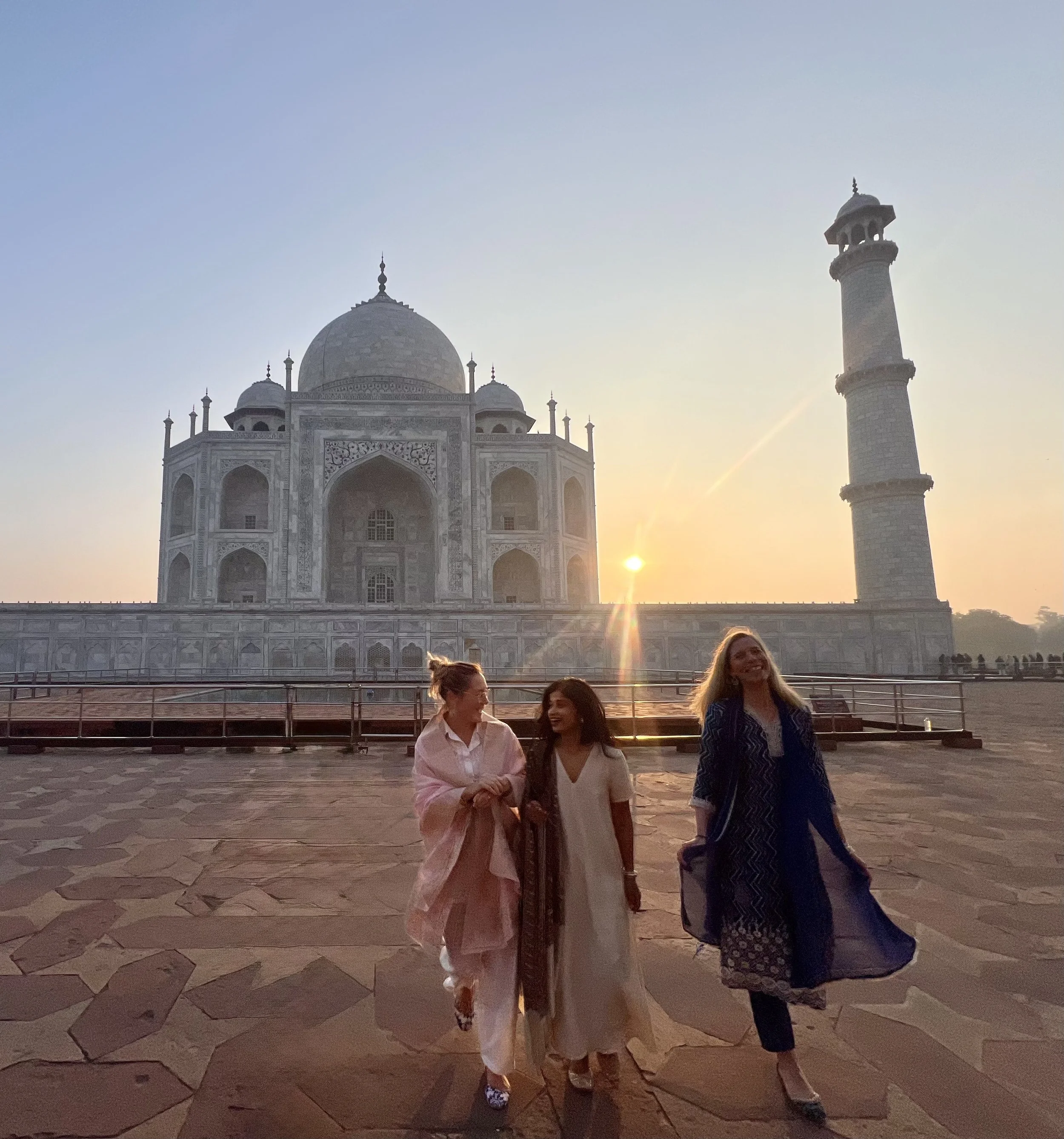
We rise before the sun to stand before the Taj Mahal as the first light turns its white marble to soft shades of pink and gold. It is a moment of profound beauty and quiet awe. In the afternoon, we depart for the Pink City of Jaipur, the final destination of our pilgrimage.
-
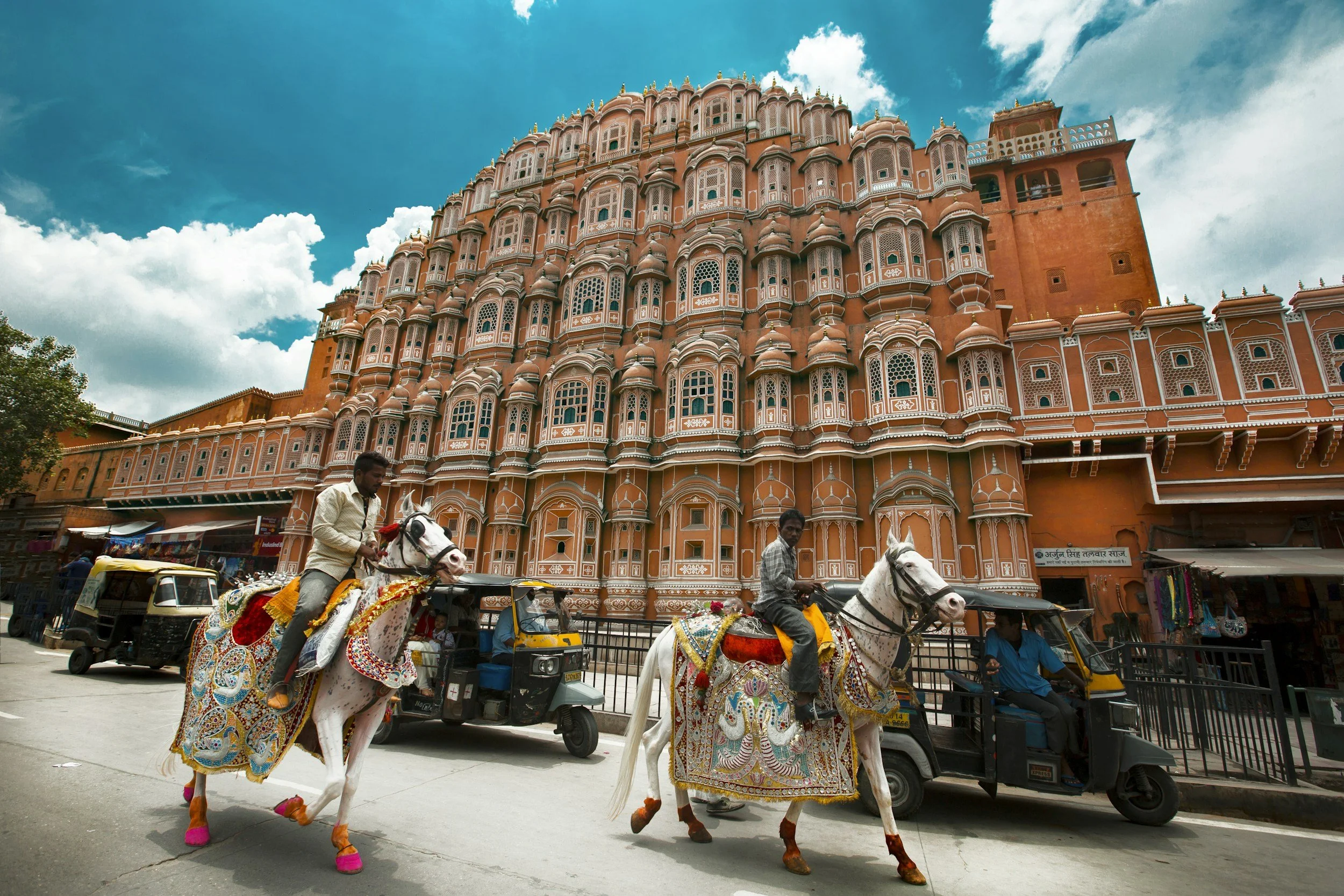
Jaipur is a feast for the senses. We ascend to the Amber Fort, a hilltop masterpiece of marble and sandstone, and visit the iconic Hawa Mahal, the Palace of the Winds. We wander through the City Palace, marveling at the intricate artistry that has survived for centuries.
-
Our final full day is spent immersing ourselves in the local crafts of Rajasthan. We participate in a traditional block printing workshop and share a private cooking session with a local family, celebrating the connections we have made. We end our journey with a festive farewell dinner, toasting to the grit and grace of our shared experience.
-
After a final breakfast together in the courtyard, we transfer to the airport for our onward journeys. You leave India with a heart full of stories, a spirit that has been unraveled and rewoven, and the enduring friendships of the women who walked beside you.
-
The Spirit of the South: Kerala
Fort Kochi | The Gateway of Heritage
A seaside sanctuary where history whispers through the leaves of ancient rain trees. Fort Kochi is a beautiful blend of cultures, where you will find a centuries-old Jewish synagogue just steps away from Portuguese cathedrals and Dutch manors. It is the perfect place to begin our journey, wandering through narrow streets filled with art galleries and the iconic sight of Chinese fishing nets silhouetted against the Arabian Sea.
Munnar | The Emerald Highlands
High in the Western Ghats, Munnar is a breathtaking expanse of rolling tea plantations that look like waves of green velvet. The air here is thin, crisp, and scented with the freshness of mountain tea. It is a place of profound quiet and spectacular vistas, offering us the chance to trek through the clouds and find stillness in the high altitude beauty of the hills.
The Kumarakom Backwaters | The Liquid Sanctuary
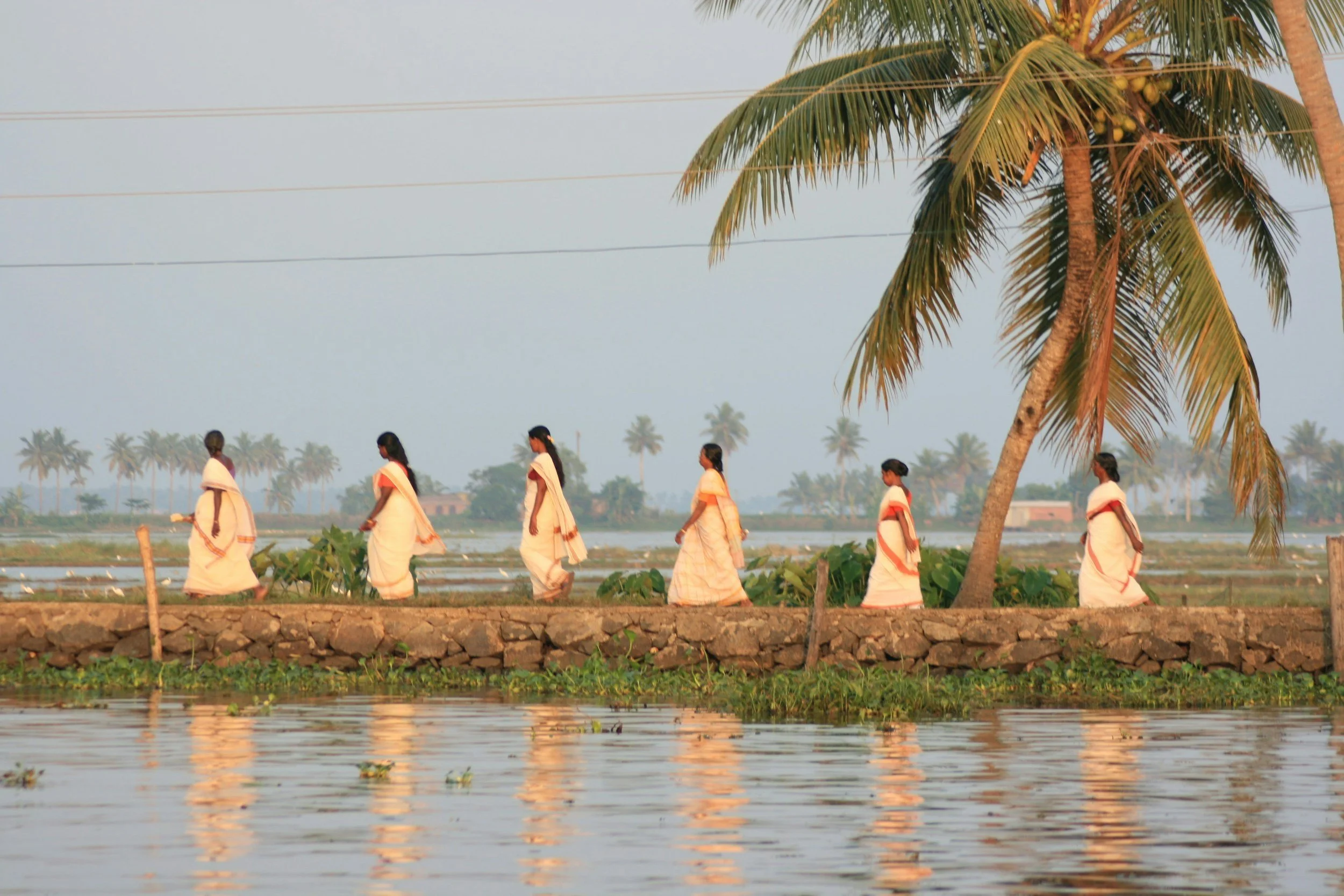
There is no experience quite like drifting through the Keralan backwaters on a traditional houseboat. This labyrinth of lagoons, lakes, and canals is the heartbeat of the region. As we move slowly along the palm-fringed banks, life unfolds at a soulful pace. It is a world of water and sky, designed for deep reflection, gentle conversation, and the rare luxury of simply being.
The Grandeur of the North: The Golden Triangle
Delhi | The Living Mosaic India’s capital is a vibrant city of contrasts where ancient history and modern life collide in a beautiful dance. From the narrow, bustling spice markets of Old Delhi to the wide, tree-lined avenues of the colonial districts, Delhi offers a sensory feast. We explore magnificent Mughal tombs and soaring minarets, finding the sacred threads of history that weave through this energetic metropolis.
Agra | The Monument to Devotion
Home to the immortal Taj Mahal, Agra is a city that speaks of eternal love and architectural perfection. Standing before the Taj at sunrise is a transformative experience, as the white marble catches the first light of day. Beyond the monument, the formidable Agra Fort stands as a testament to the grit and power of the emperors who shaped the soul of the North.
Jaipur | The Pink City of Rajasthan
The final chapter of our journey unfolds in the rose-hued capital of Rajasthan. Jaipur is a city of royal romance, hilltop fortresses, and world-renowned artistry. From the intricate facade of the Palace of the Winds to the vibrant bazaars filled with gemstones and block-printed textiles, Jaipur invites us to celebrate the radiant colours of our own spirits in a setting of pure regal grandeur.
-
Accommodation throughout:
• 3 nights Cochin
• 2 nights Munnar
• 2 nights Thekkady
• 3 nights Kumarakom
• 2 nights Marari
• 2 nights Delhi
• 1 night Agra
• 3 nights Jaipur
Some meals as listed (a combination of daily breakfasts, select lunches and dinners)
All domestic transfers and transportation in air-conditioned vehicles
Internal flight from Kochi to Delhi
Synagogue tour in Cochin
Kumbalangi village visit
Tea museum and soft trekking in Munnar
Spice plantation tour and jungle safari in Thekkady
Houseboat day cruise in the backwaters
Naturalist-led walks in Marari (hotel activity)
Delhi city sightseeing (Old and New Delhi)
Guided visit to the Taj Mahal and Agra Fort
Jaipur sightseeing and hands-on cultural experiences
Services of professional English-speaking guides throughout
Entrance fees to all monuments and attractions on the itinerary
Discount on Ayurvedic massage at select hotels
-
International airfare
Travel insurance (mandatory)
Meals not listed in the itinerary
Personal expenses such as laundry, drinks, and tips
Additional activities not specified in the itinerary
[ FAQ ]Common Questions
-
Accommodation throughout:
• 3 nights Cochin
• 2 nights Munnar
• 2 nights Thekkady
• 3 nights Kumarakom
• 2 nights Marari
• 2 nights Delhi
• 1 night Agra
• 3 nights Jaipur
Some meals as listed (a combination of daily breakfasts, select lunches and dinners)
All domestic transfers and transportation in air-conditioned vehicles
Internal flight from Kochi to Delhi
Synagogue tour in Cochin
Kumbalangi village visit
Tea museum and soft trekking in Munnar
Spice plantation tour and jungle safari in Thekkady
Houseboat day cruise in the backwaters
Naturalist-led walks in Marari (hotel activity)
Delhi city sightseeing (Old and New Delhi)
Guided visit to the Taj Mahal and Agra Fort
Jaipur sightseeing and hands-on cultural experiences
Services of professional English-speaking guides throughout
Entrance fees to all monuments and attractions on the itinerary
Discount on Ayurvedic massage at select hotels
-
Absolutely not. You never have to do yoga. You can stretch, nap, breathe, or just exist on your mat. Zero gold stars for pushing, full credit for listening to your body.
-
We understand that life can bring unexpected transitions. Because our journeys are intimate and involves significant advance planning, our deposits are non-refundable. If you cancel before the final balance is due (90 days before the start of the trip), we offer a fifty percent refund of any additional payments made, minus the initial deposit and a small processing fee. Within ninety days of departure, we are unable to offer any refunds. However, we do allow you to transfer your place to another traveler for a small administrative fee if you are unable to join us.
-
Our compass is set firmly on the ground. While we have the TICO credentials to navigate the world of air travel, we choose to focus my energy on what I do best: crafting the visceral, land-based experiences that make your journey unforgettable. Think of us as your architect for everything that happens once you touch down. You are responsible for your own passage through the clouds, but once you land, you can simply breathe and let us take the lead. We are always happy to provide guidance on arrival times and preferred airports to ensure your transition into our sanctuary is seamless. We can also recommend a trusted travel agent to help you book your flights.
-
Yes. To ensure you are fully protected against the unpredictable, comprehensive travel insurance is a mandatory requirement for every guest. This serves as your safety net for any medical needs, travel delays, or last-minute cancellations. We will ask for proof of your insurance prior to departure to ensure you are covered for the entirety of our time together.
-
While India is a vast and vibrant country that requires a level of street smarts, travelling within our intimate, founder-led group provides a significant layer of security and ease. We handle all the logistics, from private air-conditioned transport to handpicked boutique accommodations, ensuring you are never navigating the "chaos" alone. Our local guides are experts in their regions and are deeply committed to our safety and comfort. By moving together with a shared sense of presence and awareness, you are free to fully immerse yourself in the beauty of the surroundings without the stress of navigating alone.
-
Your well-being is our primary focus, and we move through the world with a high degree of care. We eat at carefully vetted restaurants and stay in high-quality lodges where food hygiene is a priority. We always provide bottled or filtered water for drinking and even for brushing your teeth. While the legendary "Delhi Belly" is a common concern, many of our travellers find great peace of mind by using Dukoral.
Dukoral is an oral, drinkable vaccine that provides a significant layer of protection against diarrhea caused by certain bacteria. It is available at most pharmacies and travel clinics and typically involves two doses taken at home before you depart. We suggest discussing this with your healthcare provider or travel clinic about six weeks before our journey to ensure you have time to complete the series. When combined with our practice of mindful eating and the restorative power of Keralan Ayurveda, this proactive step allows you to focus entirely on the beauty of the subcontinent rather than the location of the nearest restroom.
Are there specific vaccinations required for travel to India?While there are currently no mandatory vaccinations required to enter India from most Western countries, we view health preparation as an essential act of self-care. We strongly recommend that you visit a travel health clinic or your family physician at least six to eight weeks before our departure. This window of time allows your body to build immunity and gives you the space to complete any necessary series without feeling rushed.
It is common for travellers to ensure their standard boosters for Tetanus, Diphtheria, and Polio are current. Many also choose to protect themselves against Hepatitis A and Typhoid, which are standard recommendations for the subcontinent. Because our journey takes us through a variety of landscapes, from the lush tropical backwaters of the South to the vibrant urban centers of the North, your healthcare provider may suggest additional precautions based on your personal medical history. By taking these proactive steps, you arrive in the Kingdom of Contrast feeling resilient, protected, and ready to fully embrace the magic of the journey.
-
The local currency is the Indian Rupee. While cards are accepted in larger shops and hotels in cities like Jaipur and Delhi, India is very much a cash society, especially for small purchases in spice markets or village stalls. ATMs are widely available, but we suggest carrying some US Dollars as a backup
-
Yes, most international travellers require a visa to enter India. For our journey, a standard e Tourist Visa is typically the most convenient option. You can apply for this online several weeks before our departure. We will provide you with the necessary details regarding our first hotel and local contact information to make your application process as seamless as possible.
-
Shopping in India is a sensory adventure where the art of the deal is part of the experience. In the local markets and textile stalls, the initial price quoted is often just the beginning of a conversation. We invite you to approach bartering with a light heart and a radiant smile, viewing it as a playful exchange rather than a battle of wills. It is a moment of connection with a local artisan, and a bit of friendly negotiation is expected and even enjoyed by the shopkeeper.
A wonderful rule of thumb is to decide what an item is worth to you personally before the dance begins. If a hand-blocked scarf or a sparkling piece of jewelry feels like a treasure, then a fair price leaves both you and the merchant feeling satisfied. We often find that starting at about sixty percent of the quoted price and meeting somewhere in the middle is a graceful way to proceed. However, in the high-end boutiques and government emporiums where prices are fixed, we respect the set value of the craft. Your founder and our local guides are always nearby to offer a supportive nod or a bit of quiet advice, ensuring you bring home beautiful memories and authentic treasures without any of the stress.
-
India is a modest culture, particularly in the sacred spaces of the North and the villages of the South. We recommend dressing in loose, breathable layers that cover your shoulders and knees. A beautiful scarf or pashmina is your most versatile accessory, as it can be draped over your shoulders when entering a temple or used as a soft layer against the evening chill. In many temples, you will be asked to remove your shoes, so a pair of easy slip-on flats or sandals is very practical.
-
The Soulful Spices of the South: Kerala
The cuisine of Kerala is an aromatic love letter to the coconut and the sea. Known as the Land of Spices, this region uses fresh black pepper, cardamom, and ginger straight from the hills we will visit. You can expect light and fragrant dishes often served on a vibrant green banana leaf, which is the traditional Keralan way to honour a guest.
One of the highlights of our mornings will be Appams, which are delicate and lacy rice pancakes with soft centers, perfectly paired with a mild and creamy vegetable stew. You will also fall in love with the Malabari Paratha, a flaky and layered flatbread that is a true work of art. Because we are by the coast, the seafood is exceptional, often marinated in turmeric and lime before being grilled to perfection. For those who prefer plant-based dining, Kerala is a paradise of inventive vegetable dishes, from tempered lentils to tangy pineapple curries.
The Royal Feasts of the North: Rajasthan and Delhi
As we move into the North, the flavours become richer and the textures more robust, reflecting the opulent history of the Mughal courts and the warrior kings of Rajasthan. Here, the focus shifts to aromatic gravies, slow-cooked lentils, and a magnificent variety of tandoori breads.
You must try the Dal Baati Churma, a classic Rajasthani dish of baked wheat balls served with a spicy lentil soup and a sweet crumbled topping. The North is also famous for its Paneer dishes and rich, buttery Makhani sauces that are deeply satisfying. In the narrow lanes of Old Delhi, the air is thick with the scent of sizzling Kebabs and sweet Jalebis. We will also have the chance to sample the thali, a circular platter that offers a little bit of everything, allowing you to experience the full spectrum of sweet, salt, bitter, and spice in a single sitting.
The Ritual of Chai and Sweetness
No matter where we are in India, the day is punctuated by the ritual of Masala Chai. This warming blend of black tea, milk, and hand-crushed spices is the true heartbeat of Indian hospitality. It is often served in small clay cups called kulhads, which are returned to the earth after use. For those with a sweet tooth, the world of Indian desserts is a revelation. From the milk-based Gulab Jamun soaked in rose syrup to the cooling Mango Lassi of the summer months, every meal ends with a graceful note of sweetness that lingers long after the plates have been cleared.
-
Yes, alcohol is available in most of our hotels and many restaurants throughout the journey. In Kerala, the laws are a bit more restrictive, and alcohol is primarily served in larger hotels rather than small local cafes. In Rajasthan, you will find a wonderful selection of international wines and local spirits. We often enjoy a quiet gin and tonic or a glass of wine during our evening reflections, celebrating the day’s discoveries in a relaxed and inclusive atmosphere.
-
Regarding gratitude, tipping is a standard practice and a kind way to acknowledge the exceptional service of our drivers and guides. We will provide specific guidance on the group tipping pool during our first evening together, so you never have to worry about the math.
-
In the Kingdom of Contrast, the most meaningful connections often happen through the small, unwritten rules of daily life. Here is how we navigate the local customs of India with grace.
The Grace of the Greeting
The most beautiful way to begin any interaction in India is with the Namaste. By placing your palms together at your heart and offering a slight bow, you are literally saying the divinity in me honours the divinity in you. While you may find that many people in cities are comfortable with a handshake, the Namaste remains a universally respected gesture that keeps a respectful distance while offering immense warmth. It is especially appreciated when greeting elders or entering a village home, as it reflects the humility and spirit that define Indian hospitality.
The Hidden Language of Hands and Feet
In the Indian tradition, the right hand is reserved for all things auspicious, including eating, giving, and receiving. Whether you are accepting a blessing at a temple or handing a merchant a few rupees, always lead with your right hand to show respect. Conversely, the feet are considered the most humble and "unclean" part of the body. You will notice that we leave our shoes at the entrance of every home and temple to keep the interior sanctuary pure. When sitting on the floor or a low cushion, take care not to point the soles of your feet toward people, sacred altars, or images of deities. If you happen to accidentally brush someone with your foot, a quick and gentle apology is always met with a smile.
Entering Sacred Sanctuaries
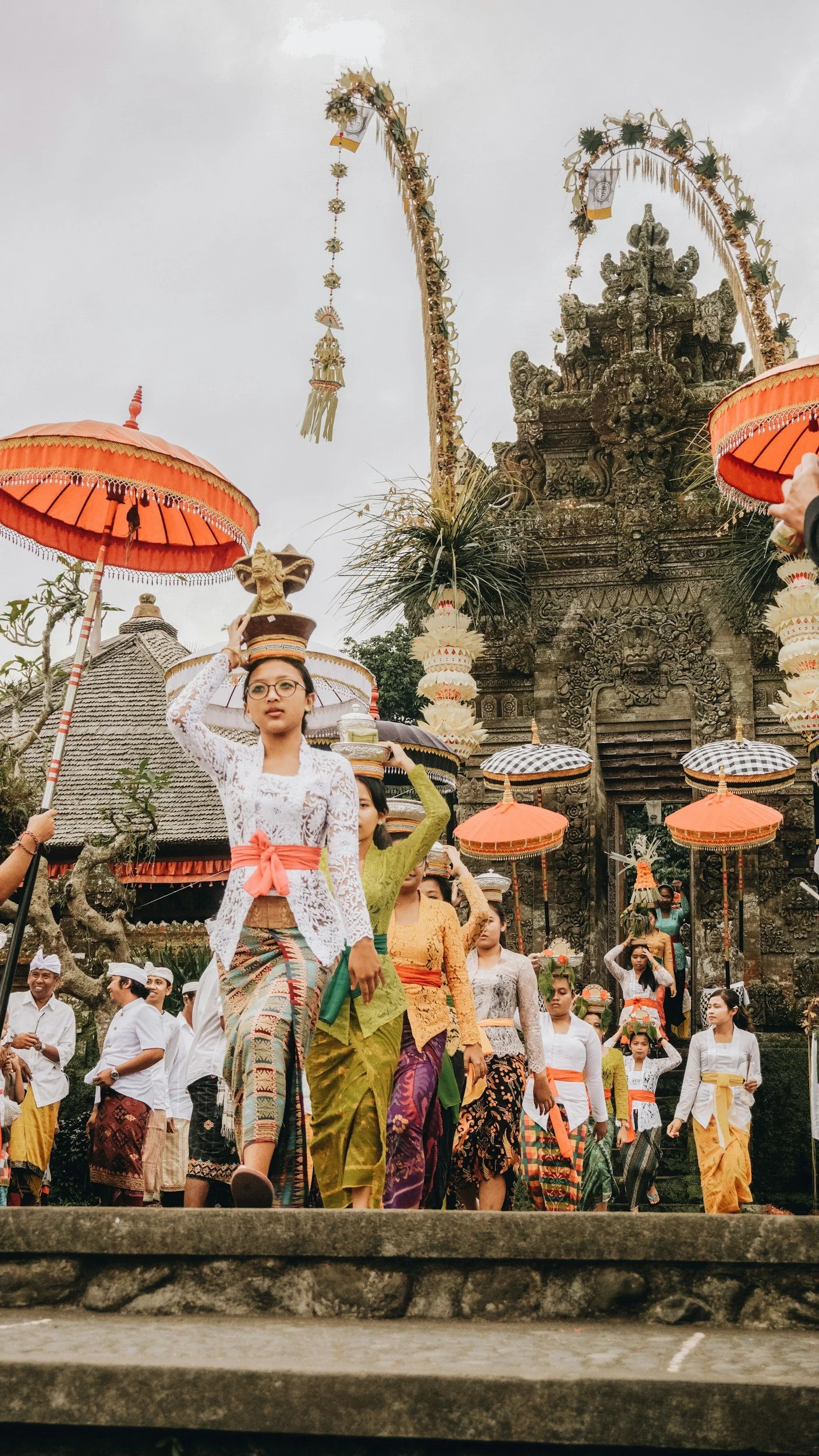
When we enter the majestic temples of the South or the grand mosques of the North, we do so as quiet observers of a living faith. Beyond removing our shoes, we ensure our shoulders and knees are covered as a sign of reverence. In certain spaces, such as Sikh Gurdwaras, we will also cover our heads with a soft scarf. You may notice that many temples involve walking in a clockwise direction around the inner sanctum, a practice known as Pradakshina. We move with the flow of the local worshippers, allowing the rhythm of the bells and the scent of incense to centre our minds. It is also wise to leave any leather items, such as belts or bags, at our hotel or in the vehicle when visiting certain Hindu and Jain temples, as leather is often prohibited within these sacred walls.
The Art of the Interaction
Indians are known for their genuine curiosity and may ask you questions about your family or your life that feel surprisingly personal. In this culture, these questions are not intrusive but are a way of placing you within their world and establishing a bond. Feel free to share as much or as little as you like, perhaps even asking a few questions in return to deepen the connection. You may also notice the famous Indian "head bobble," a gentle tilt of the head from side to side. This graceful movement can mean anything from yes to I understand or even I’m listening. It is a beautiful part of the non verbal poetry of India that you will likely find yourself adopting before our journey is through.
-
1. Namaste (Hindi) | Namaskaram (Malayalam)
This is the most essential greeting you will use. It is a soul to soul recognition that means the light in me honours the light in you. Use this with a gentle bow of the head and palms pressed together. It is a perfect way to begin any interaction with warmth and respect.
2. Dhanyavad (Hindi) | Nanni (Malayalam)
Gratitude is a universal currency. While many people in India speak English and will understand thank you, offering a Dhanyavad in the North or a soft Nanni in the South shows a thoughtful effort that is always met with a genuine smile.
3. Aap Kaise Hain? (Hindi) | Sugamano? (Malayalam)
These phrases mean how are you? In a culture that values connection and family, asking about someone’s well being is a wonderful way to open a conversation. You will likely hear these asked of you often, as the local people are naturally curious and welcoming.
4. Shanti (Hindi & Malayalam)
A beautiful word used in both regions, Shanti means peace. You will hear it at the end of prayers and during our quiet moments of reflection. Using this word when discussing the serene backwaters or a quiet temple sanctuary shows that you are attuned to the spiritual heartbeat of the country.
5. Phir Milenge (Hindi) | Pinne Kaanam (Malayalam)
Rather than a final goodbye, these phrases mean we shall meet again. It is a much more hopeful and poetic way to depart, suggesting that the connections we make on this nineteen day pilgrimage are never truly lost, but simply waiting for the next encounter.