

Gloria Steinem, the freedom of the road and the lives women were never supposed to choose.
Jesus fucking Christ (and I make no apologies for “my French”) - Not another one.
I have not written much in a while. But here I am, three times in the last week
The words are coming quickly now, called forward by these great women and by the uncomfortable recognition that their lives are pressing against questions I am being asked in my own.
Jane Goodall died less than a year ago. Then Dolly Parton. Now Gloria Steinem.
It feels as though women who helped make the world larger are leaving at precisely the moment so many forces seem determined to make it smaller.
Not another great woman gone while the world is trying to drag women backwards. Not another voice we still need becoming an archive. Not another life of courage handed over to us as memory when what we need, desperately, is more women like her standing here in the flesh, reminding us that the world as it is, is not the world as it has to be.
Yes, 92 is a long life. A remarkable life. A life used fully and fiercely. But some women make themselves feel structural. They become part of the scaffolding holding up our belief that progress is possible. When they go, you feel the building shift.
Gloria Steinem was one of those women.
She was a journalist, an organizer and one of the most recognizable leaders of the modern women’s movement. But that is not where I want to begin. I want to begin with the road, because Gloria did.
Her 2015 memoir was called My Life on the Road. Not On the Road, as I first remembered it, but My Life on the Road, a title that matters because this was never meant to be a universal theory of travel. It was an account of what movement did to one woman, and of what that woman was able to do because she kept moving.
When people asked where her hope and energy came from, Gloria’s answer was beautifully simple: “Because I travel.”
Not because travel distracted her from the world. Because it returned her to it.
For Gloria, the road was not a backdrop, a bucket list or a collection of photogenic arrivals. It was a way of listening. It took her out of theory and into kitchens, taxis, village meetings, political campaigns and conversations with people whose lives could never be reduced to a statistic. The road, she wrote, was as messy as real life. If she allowed it to lead, it “changed who I thought I was.”
That may be the most honest definition of meaningful travel I have ever encountered.
We so often speak of travel as though the traveller remains at the centre of it. Where I went. What I saw. What I learned. But Gloria’s road required a different posture. It asked her to become a guest. To sit eye to eye. To listen before speaking. To understand that proximity changes what certainty cannot.
Her education in this kind of travel began early. Her father packed the family into a car and drove across the United States in search of adventure and a living. Later, in her twenties, she spent two formative years in India. She moved through villages, encountered Gandhian organizing and began to understand that change did not simply descend from podiums. It grew through people gathering, telling the truth about their lives and discovering that a private burden was often a shared injustice.
The road did not take her away from activism. The road taught her how to become an activist.
Even the dedication of My Life on the Road begins with a journey and a choice. In 1957, at 22, Gloria was on her way to India after breaking an engagement. In London, at a time when abortion was illegal, Dr. John Sharpe helped her obtain one. He asked her to protect his identity and to promise that she would do what she wanted with her life.
She did.
That story stopped me cold.
Because the right to move through the world begins long before a woman boards a plane. It begins with the right to belong to herself. To decide what happens to her body. To decide whether she will marry, whether she will mother, where she will live, and what shape her life will take. Without those freedoms, the road is not open. It is only scenery beyond a locked door.
I know something about refusing the expected map.
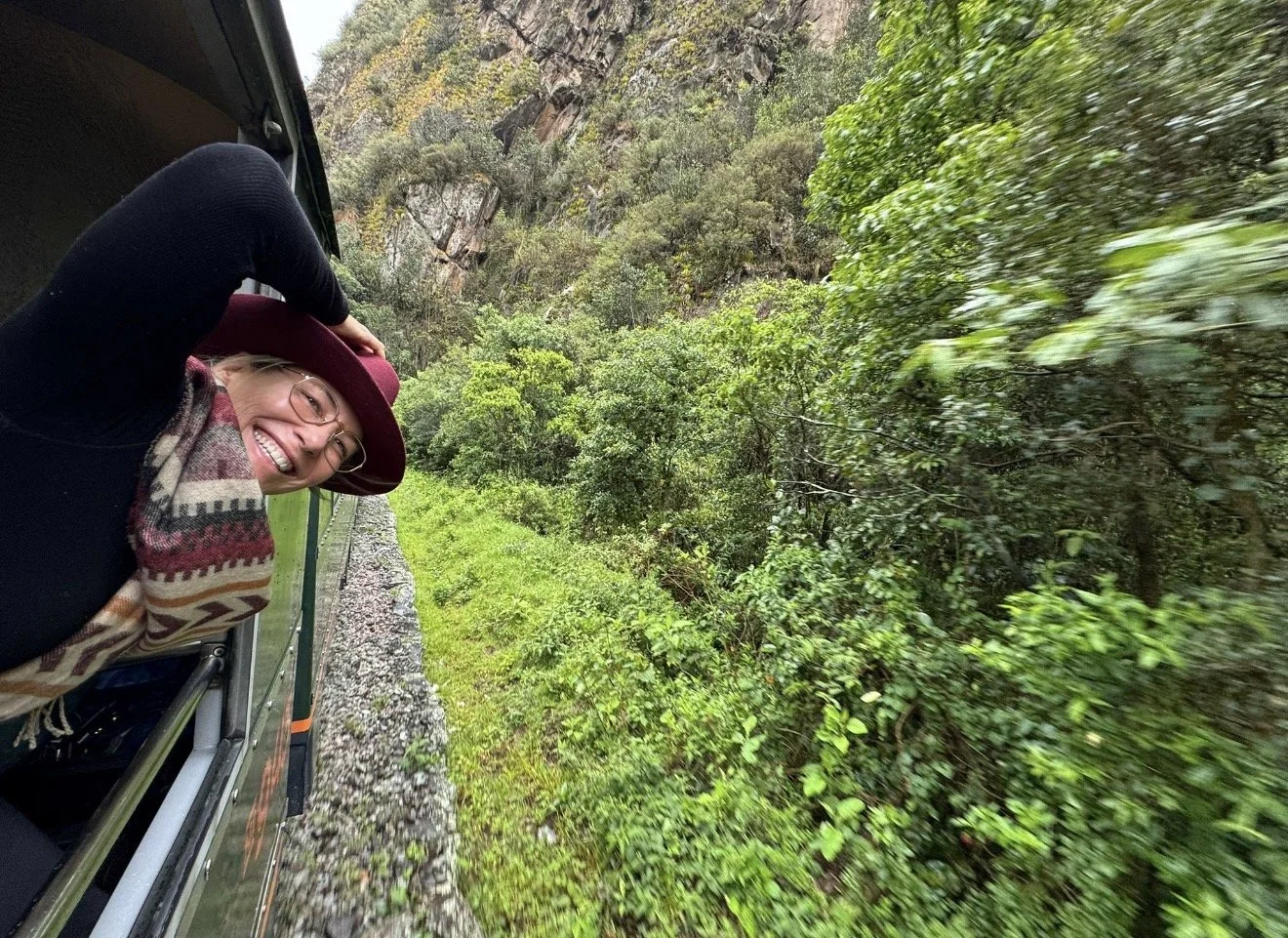
But first, I followed it.
For 18 years, I did what I thought a successful woman was supposed to do. I built a corporate career. I worked my way up the ladder. I bought the condo, the car and the purse. I accumulated the visible evidence of a life going well and waited for it to feel like one.
It never did.
There was nothing inherently wrong with any of it. That was what made the emptiness so difficult to explain. I had achieved things I had been taught to want, yet they brought me neither joy nor any enduring sense of purpose. My life looked convincing from the outside while becoming increasingly unrecognizable from within.
Eventually, I quit. I left corporate life without a replacement map that could promise me the same tidy markers of progress. It was frightening, but it was also the beginning of an education Gloria understood well: sometimes the only way to discover what is yours is to step away from what was prescribed.
I did not marry until I was 49. I chose not to have children. I have been asked more times than I can count why I never became a mother. I have been offered sympathy for a loss I never said was mine. Before I married, people repeatedly asked whether I had a husband, whether I had ever had one, and then gave me that look when I said no. The look that suggests a woman alone must be unfinished, unlucky or waiting to be chosen.
But I was not waiting for my life to begin.
I was living it.
I had countries to live in, businesses to build, people to love, mistakes to make and selves to outgrow.
I had already uprooted my life once to live in Botswana, where the Moremi dust found its way into my blood and never entirely left. Then, years later, I was on my way to Africa for a visit when I changed my mind and rerouted myself to Costa Rica. What could have remained a detour became a three-year pursuit of a question: how could I move there? Eventually, I did. I dismantled my life and rebuilt it in another country for the second time.
This is what the road can do. It can interrupt a destination with a direction.
I travelled to Nepal alone to train as a yoga teacher. I trekked to Everest Base Camp solo. For my 50th birthday, I went to India, not to skim its surface but to go deeper, immersing myself in its culture and in the traditions that had shaped the yoga I practised and taught. Again and again, travel pushed me beyond the identity I already knew and asked what else might be true.
Most of my travelling life has been solo. Now I travel with the groups of women I lead and, of course, with my husband. But marriage has not closed the door on travelling alone. I still make space for it. Not because partnership is lacking, but because solitude gives me something partnership cannot and should not be asked to provide: an encounter with myself without the familiar reflection of another person beside me.
Along the way, I crossed borders and sat with strangers. I learned that home can be a place, a person, a landscape and sometimes the feeling of recognizing yourself in a life no one else designed for you.
Travel did not fill the space where children or an earlier marriage were supposed to be. My life was not a substitution. It was not Plan B dressed up with a passport.
It was mine.
That distinction matters because we still speak about women’s choices as though one authentic life must be measured against another. A woman who does not have children is presumed to be missing motherhood. A woman who travels alone is presumed to be waiting for company. A woman who changes direction at 50 is asked why she could not be grateful for the life she already had.
Why must curiosity be mistaken for dissatisfaction?
Why do we assume that wanting to see more of the world means loving our lives less?
Gloria understood that motion and belonging are not opposites. She did not learn to drive, yet spent much of her life in transit, often in passenger seats, taxis, buses and airplanes. Perhaps that was part of the point. When you are not gripping the wheel, you can turn toward the person beside you. You can ask a question. You can notice what is passing outside the window. You can let the journey be something other than a route between two places.
That is the kind of travel I believe in.
Not travel as consumption. Not country counting. Not arriving with our assumptions packed more carefully than our clothes. Travel as attention. Travel as the temporary surrender of expertise. Travel as the humbling discovery that our way of living is only one way, our history is only one telling, and our normal is not neutral.
I see this transformation in the women who travel with me.
Many arrive alone. Some have spent decades being the keeper of everyone else’s logistics, remembering the passports, the medication, the birthdays, the boarding times and who needs what to feel comfortable. Some have lost partners. Some are newly divorced. Some are married to people they love who do not want to travel. Some simply got tired of postponing their own curiosity until another person shared it.
At first, they often apologize for what they need. A private room. A slower morning. Help with a suitcase. Time alone. Company at dinner.
Then something shifts.
They stop asking permission to occupy the experience. They sit down with women who were strangers days earlier. They navigate unfamiliar places. They discover that capability does not disappear with age, and that a woman can be both uncertain and brave in the same breath. They return home carrying more than photographs. They carry evidence of themselves.
This is why women’s travel matters to me, particularly travel after 50. Not because every trip must be transformative. Sometimes a beach may simply be a beach, and thank God for that. But the freedom to go is never as frivolous as it appears.
Nor is this desire unusual. In a 2024 Journeywoman survey of 1,630 women over 50, 67 percent identified as solo travellers. Forty-one percent said they preferred travelling independently, while 27 percent travelled solo within a group. A separate 2026 global survey of approximately 2,000 experienced solo female travellers and 800 women who had not yet travelled alone found that freedom and flexibility were the leading motivations for solo travel. Escape from routine, time for oneself and the desire for a challenge followed closely.
These surveys drew from travel communities rather than random samples of all women, so they should not be mistaken for universal population figures. But they illuminate something I witness constantly: women are no longer treating the absence of a companion as the end of the conversation. After 50, many have more agency, more perspective and a more urgent relationship with time.
They are not all trying to prove they can be alone. Often, they are simply done waiting.
That freedom was built.
Women organized for the right to vote, earn, own, borrow, work and make decisions about their bodies and futures. Not Gloria alone, and never Gloria alone. Feminist progress has always been collective, shaped by women whose names became famous and countless others whose names did not. Gloria’s particular gift was to carry stories between rooms. She used visibility to make the private public, and the public political.
Travel made that possible because travel kept introducing her to lives beyond her own.
There is a warning in that for all of us.
Travel does not automatically make us wiser, kinder or more open. We can cross an ocean without allowing a single assumption to be disturbed. We can photograph poverty, consume culture and return home congratulating ourselves for having seen the world while having encountered almost none of it.
The road only changes us if we let it.
That requires humility. It requires conversation. It requires putting down the phone, looking someone in the eye and understanding that we did not come merely to collect their landscape. It requires being willing to come home less certain than when we left.
At a moment when people are retreating into algorithmic tribes, when women’s rights are being contested and when fear is being turned into policy, travel can be more than escape. Done with care, it can be resistance to the shrinking of our imaginations.
It reminds us that no nation, religion, gender, race or political slogan contains the whole human story. It takes us out of statistics and seats us across from a person. It becomes harder to flatten people into categories after they have poured your tea, told you about their mother or made you laugh until your stomach hurt.
Perhaps that is why Gloria travelled for so long. The road kept the world human.
And perhaps that is what we are being asked to do now that she is gone.
We cannot preserve great women by turning them into quotes on pretty backgrounds. We honour them by continuing the movement of their lives. By using the freedoms they helped widen. By defending those freedoms when they narrow. By speaking when silence would be easier. By listening when certainty would be more comfortable.
By going.
Jesus fucking Christ (and again, I do not apologize for my French), not another one. Not now. The world is a disaster, and we need every great woman we can get and keep.
But since we could not keep Gloria, let this be a call to the great women who remain.
Stand taller. Speak louder. Become harder to ignore. Take up the room, the road and the life that belongs to you. Do not wait for a partner, the perfect time, a smaller body, a quieter world or anyone else’s permission.
Take the trip.
Not because travel will solve everything. It will not. Take it because movement can wake us up. Because listening is part of changing the world. Because another woman fought for your life to contain choices she was once denied.
Take it because the road may return you to yourself.
Take it because you are not waiting for your life to begin.
You are living it.
And when someone asks what keeps you hopeful, curious and alive, perhaps you will know exactly what Gloria meant.
Because I travel.
xo
Penny